How to Swim Correctly: A Beginner’s Swimming Guide (2026)
Vlad Paturca8 min read
Quick Answer
This swimming guide for beginners walks through three things in order: relaxed breathing, a horizontal body position, and steady leg kicks. Once those click, every stroke becomes easier. Built by the Win and Swim coaching team in Amsterdam-Noord, it covers the gear you need, the drills that work, and the mistakes that quietly stall most adult learners.
Most adults who try to learn swimming on their own quit within a month. Not because they can’t do it, but because no one gave them the right order to learn things in. This swimming guide gives you that order.
It comes from inside the Win and Swim coaching team in Amsterdam-Noord, where we’ve taught hundreds of adult beginners since 2021. According to the Royal Dutch Swimming Federation (KNZB), the Netherlands has near-universal swimming literacy among children, but adults who never learned remain a quietly underserved group. If that’s you, this guide is the shortcut.
Stick with the steps below and you’ll go from “splashing and panicking” to “actually swimming” faster than you’d expect, usually within 6 to 10 lessons.
Why Follow This Swimming Guide for Beginners
Swimming is one of the few full-body workouts that’s truly low-impact. The U.S. Centers for Disease Control lists it among the most efficient cardiovascular activities, and water buoyancy reduces joint load by up to 90 percent. That’s why we see triathletes, expats with back pain, and complete beginners share the same lane at our Amsterdam-Noord pool every week.
The advantage of a structured swimming guide over random YouTube videos is sequencing. Most online tutorials teach freestyle in lesson one. We don’t. Real progress comes from mastering body position and breathing first, then layering strokes on top. Skip that order and you’ll spend years fighting the water instead of moving through it.
Essential Swimming Gear for Beginners
You don’t need much, but the wrong gear makes everything harder. Here’s the short list every beginner should own before their first lesson:
Swimsuit: snug, chlorine-resistant, and built for movement. Speedo offers solid budget options; Arena is the upgrade pick.
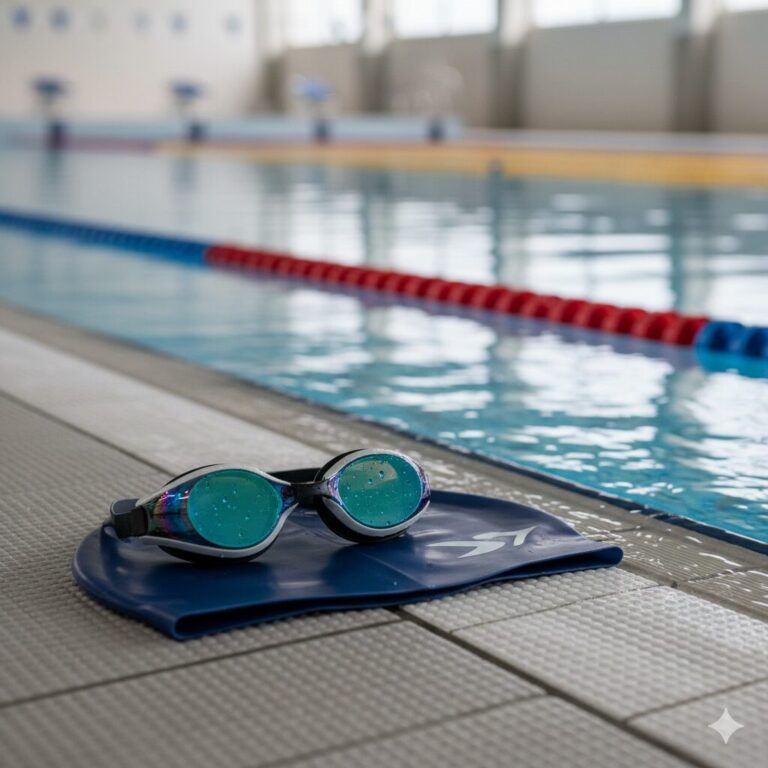
Goggles: anti-fog, suction-tight, with adjustable straps. Cheap goggles fog within five minutes and ruin the session.
Swim cap: silicone for comfort, latex for grip. Required at most Amsterdam pools and a small but real drag-saver.
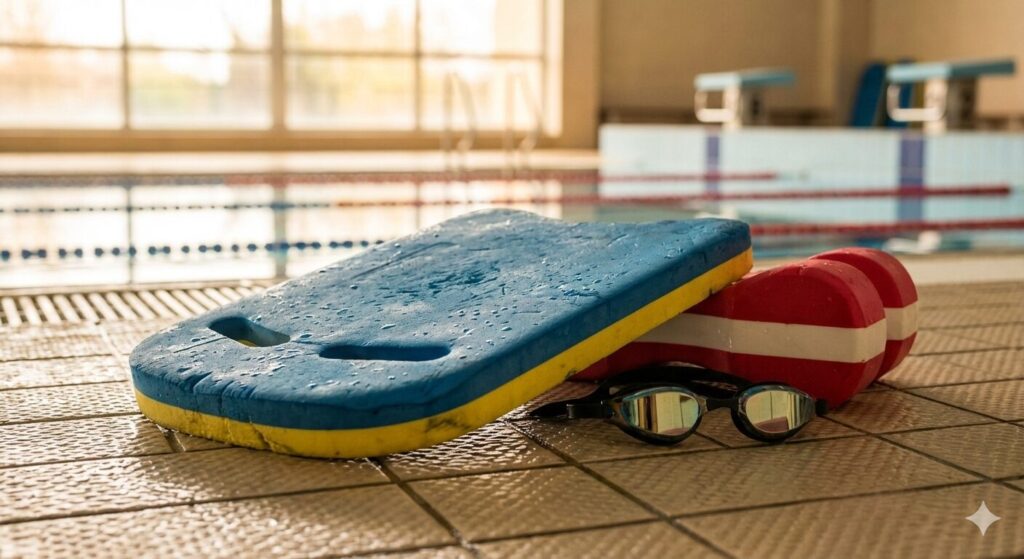
Kickboard and pull buoy: useful, but only with a coach. On their own, they often hide flaws instead of fixing them.
Skip the smartwatch for now. You’re not training laps yet, you’re learning the water. For sizing tips and brand picks, see our full beginner swim gear list.
Basic Swimming Techniques: A Step-by-Step Guide
This is the part most online tutorials skip. The order matters more than the technique itself.
Step 1: Float. Stand in chest-deep water, take a deep breath, lean forward, and let your face go in. Your legs should rise on their own. If they sink, your head is probably too high. Practice for five minutes per session until it feels effortless.
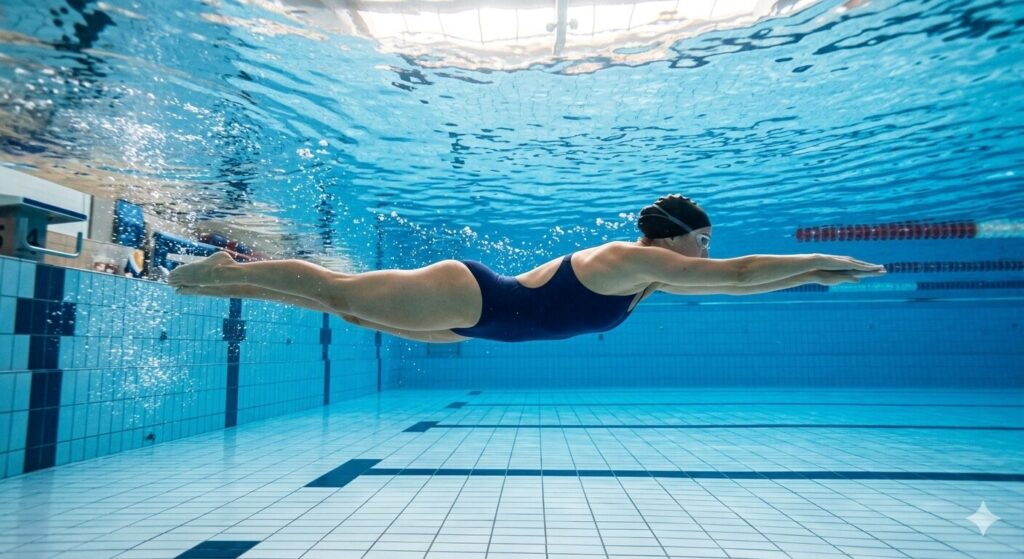
Step 2: Glide. Push off the wall with arms outstretched, face down, holding the float. Aim for three to five metres of silent gliding. This builds the horizontal posture every stroke depends on.
Step 3: Kick. Hold a kickboard, keep your legs straight but loose. Kicks come from the hip, not the knee. Small fast flutters beat big slow ones every time.
Step 4: Breathe. Practice exhaling slowly underwater for a count of three, then turning your head sideways for a quick inhale. (For a deeper look, see our article on freestyle breathing made simple.)
Step 5: Combine. Add one arm at a time. Most beginners try to do everything at once and end up vertical and gasping. Don’t be that person.
Beginner-Friendly Swimming Drills
Drills are how you lock in technique without thinking about ten things at once. Pick two per session, no more.
Catch-up drill: one arm forward, one arm at your side. Touch hands before switching. Forces a long, smooth stroke.
6-3-6 drill: six kicks on one side, three strokes, six kicks on the other. Builds rotation and balance.
Bubble breathing: sit in chest-deep water and exhale fully through your nose underwater. Repeat 20 times. Most adults never exhale properly underwater. This drill fixes that.
Streamline push-offs: push off the wall, hands stacked, body tight. Hold position until you stop. Trains body line and core engagement.
Quality beats quantity. Two clean drills are worth more than ten sloppy ones.
Pool Safety Tips for New Swimmers
Pool drowning isn’t dramatic. It’s quiet, fast, and almost always preventable. Three rules cover most of it:
Tell the lifeguard you’re a beginner. They’ll keep an eye on you, no judgement involved.
Stay in the lane that matches your speed. Slow lanes exist for a reason; jumping into a fast lane is the most common newbie mistake.
Never push depth or distance when tired. Swimming exhaustion is sneaky and shows up after you stop, not during.
If swimming makes you nervous beyond normal beginner jitters, that’s water anxiety, not weakness. Our guide on conquering your fear of water has practical fixes that work for adults.
Common Swimming Mistakes (And How to Fix Them)
After hundreds of adult beginners and over 250 medals between our coaches, the same five issues come up again and again:
Head too high. Lifts the hips, sinks the legs, ruins the body line. Fix: look at the bottom of the pool, not the wall ahead.
Holding breath. Causes panic and slows recovery. Fix: exhale continuously underwater, never hold.
Bent-knee kicks. Generates drag, not propulsion. Fix: kick from the hip, knees soft but mostly straight.
Short, choppy arm strokes. Wastes effort. Fix: extend fully, finish at the hip.
Skipping the legs. Arms alone won’t carry you. Fix: drill legs separately twice a week.
You can self-teach, and people do. But it takes much longer and reinforces habits you’ll need to unlearn later. A coach catches issues you can’t feel from inside your own body.
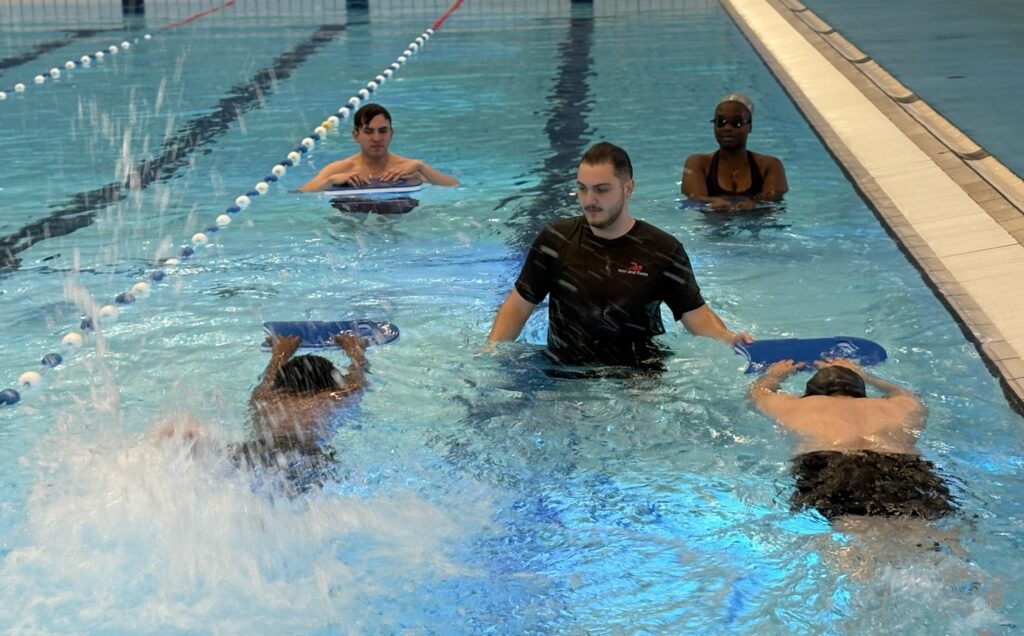
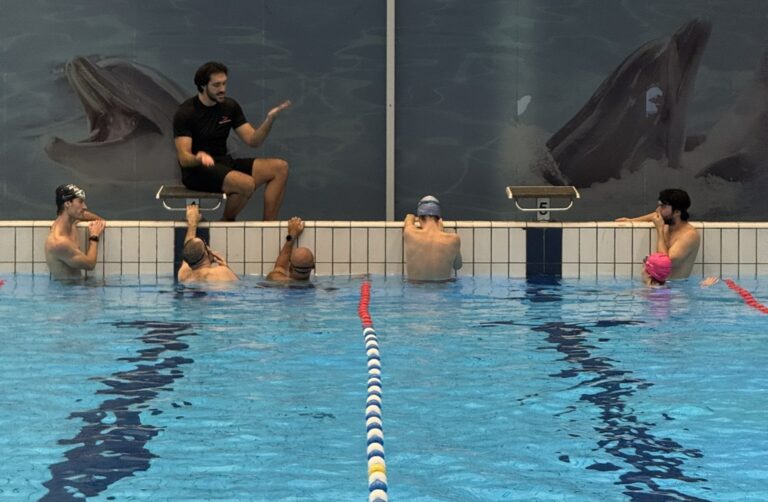
In Amsterdam-Noord, Win and Swim runs adult beginner swimming lessons in groups of up to five people. Small enough that you get real correction, large enough that you don’t pay private-coach prices. Most students go from zero to a relaxed 25 metres within 8 to 12 lessons.
If you’ve already had a few lessons but plateaued, our intermediate adult track picks up from breaststroke and freestyle and adds rotation, bilateral breathing, and longer sets.
Staying Motivated and Tracking Progress
Adult learners often plateau around lesson 4 or 5, right before things click. The fix is patience plus measurement.
Set process goals, not outcome goals. “Exhale fully on every breath” beats “swim faster.”
Track three numbers: longest non-stop swim, breaths per length, and how relaxed you feel after. The last one matters most.
Find a partner. Adults who swim with a peer attend roughly twice as many sessions in their first three months. We see it in our group lessons every term.
Celebrate the boring milestones. The first time you breathe without panicking is bigger than your first 50 metres.
Swimming is one of those skills that feels impossible right up until the moment it doesn’t. Stay consistent, get the basics right, and the rest takes care of itself.
Frequently Asked Questions
How long does it take an adult to learn to swim?
Most adults reach a relaxed 25-metre freestyle in 6 to 10 one-hour lessons, assuming consistent attendance once a week. Comfort in deep water often comes earlier, around lesson 3 or 4. For a detailed breakdown, see our article on how many swimming lessons adults need.
Can I learn to swim if I’m afraid of water?
Yes. Water anxiety is common and treatable. Start with shallow-water breathing drills, work with a calm coach, and avoid jumping into deep ends until you’ve built body trust. Win and Swim runs a dedicated aquaphobia track built around exactly this problem.
Do I need a swimming diploma to swim in Dutch pools?
No. Public pools in the Netherlands welcome adult beginners without a Zwemdiploma A. The diploma is a safety standard for children, not a legal requirement for adults. Read more in our piece on why expats may still want a Dutch swim diploma.
What’s the easiest stroke to learn first?
Breaststroke is usually the easiest first stroke because the head stays above water and breathing is straightforward. Freestyle is more efficient long term, so most coaches in Amsterdam introduce both early.
How often should I swim as a beginner?
Two sessions per week is the minimum to actually progress. Three is ideal. Daily isn’t necessary and often slows recovery, especially when you’re learning new movement patterns.
Written by
Vlad Paturca
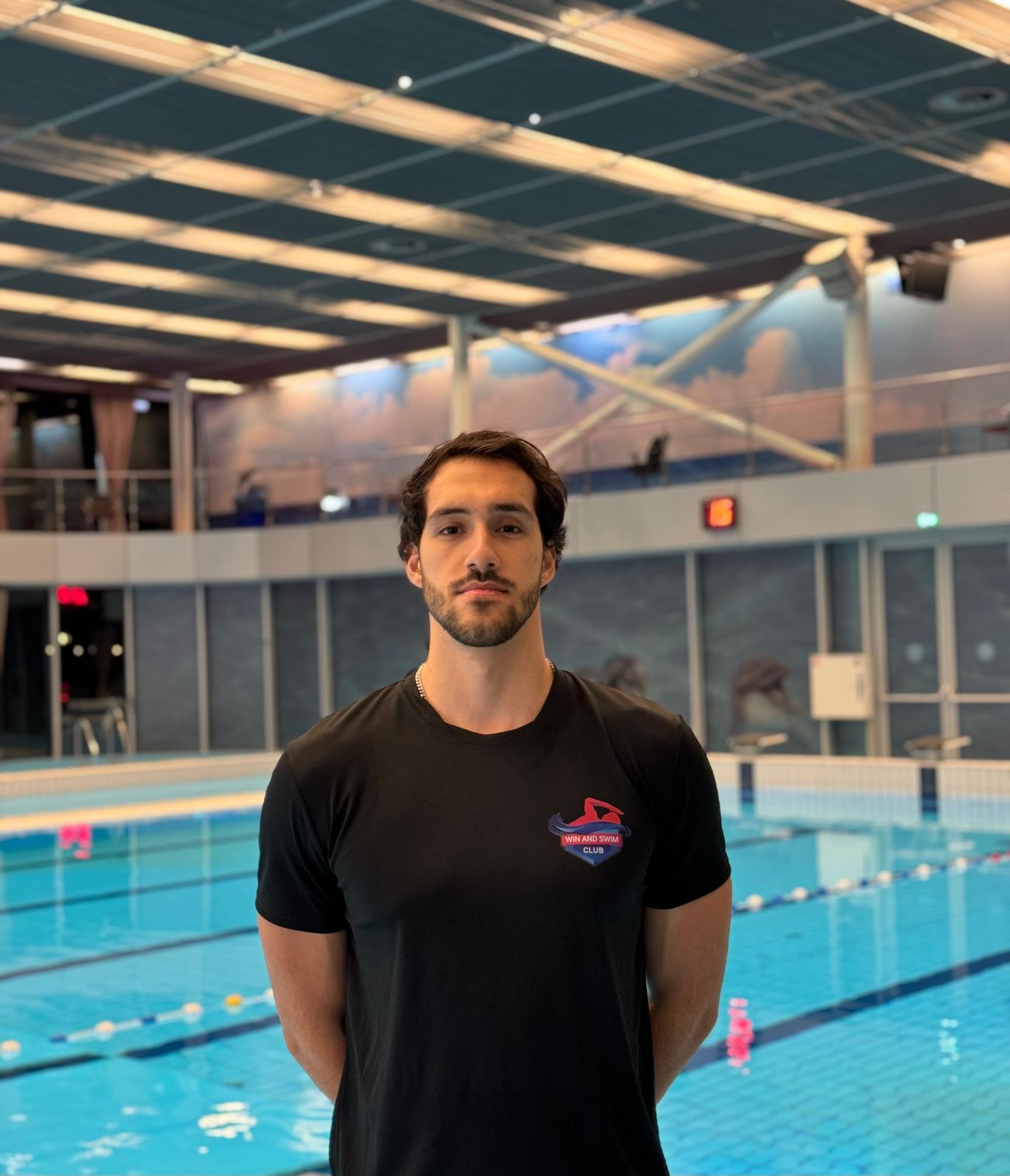
KNZB-certified swim coach, former Romanian national and international freestyle medalist, and founder of Win and Swim Amsterdam. Passionate about adult learners and evidence-based technique. With a bachelor degree in swimming and a first aid course, swimming is my element.

 Vlad Paturca