Swimming Equipment for Beginners: The Only List You Need

Swimming Equipment for Beginners: The Only List You Need
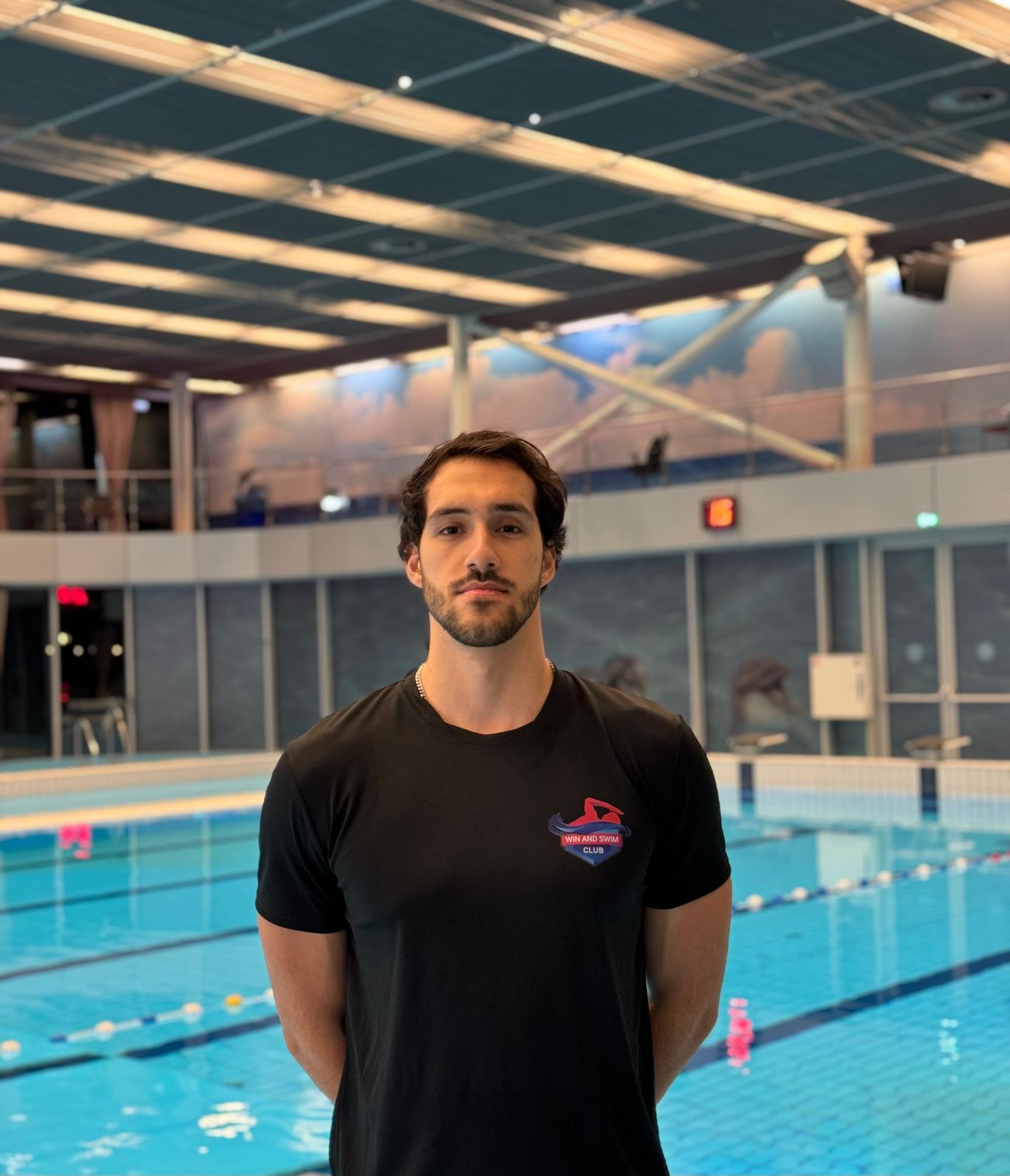 Vlad Paturca
On this page
“You don’t need any gear to learn to swim. Just get in the water.”
That myth keeps beginners stuck. Show up without goggles and every push-off becomes a blur of chlorine sting and hair in your face. Overcompensate and you buy a small scuba shop, then spend more time adjusting gadgets than learning skills.
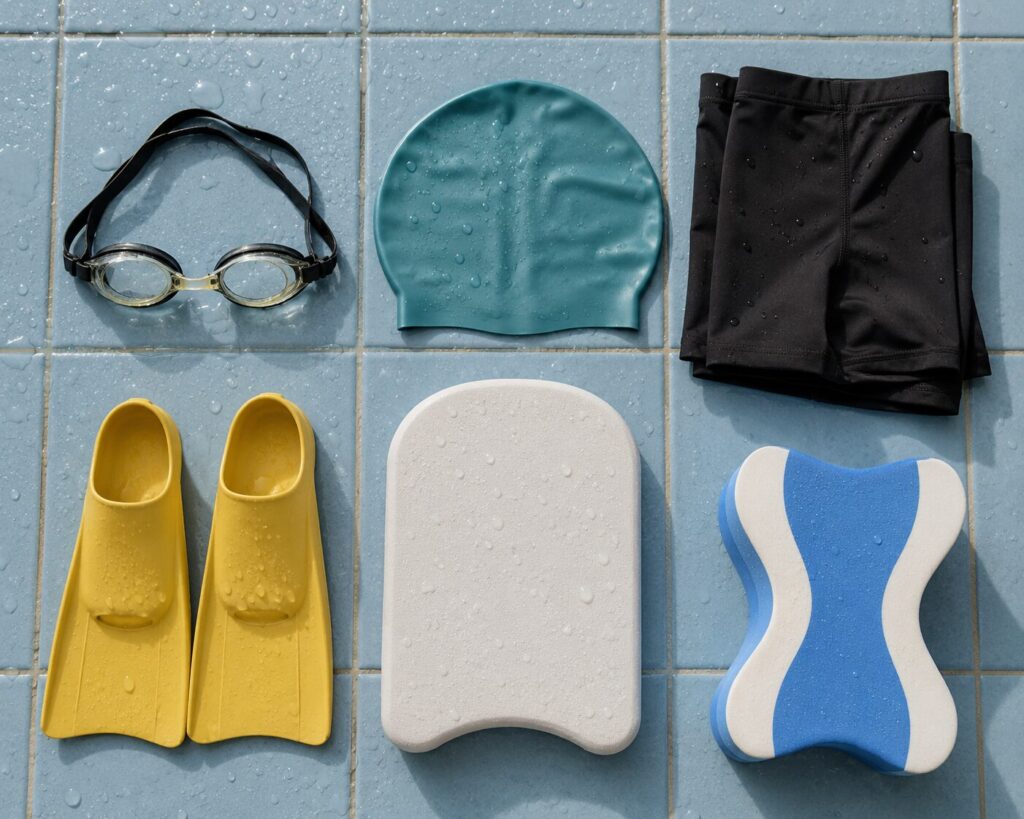
Here’s the swimming equipment for beginners that actually matters: goggles, a silicone cap, fitted swimwear, short-blade fins, a kickboard, and a pull buoy. Six items. Nothing else earns a place in your bag during your first months.
And about that chlorine sting: the red-eye burn after a swim isn’t chlorine itself. According to the US CDC, it’s caused by chloramines, compounds that form when chlorine reacts with sweat and everything else swimmers bring into the water. Goggles solve it, which is why they top every serious list.
Quick answer: goggles, silicone cap, fitted swimwear, short fins, kickboard, pull buoy. Bought new in the Netherlands: €60 to €110 total. If your swim school provides boards, buoys, and fins (we do), you only need the first three: roughly €30 to €50.
The swimming equipment list: 6 essentials
Your goal isn’t more equipment. It’s more calm, repeatable practice. Every item on this swimming equipment list either removes a distraction or gives you feedback on what your body is doing. Here’s the full list with real Dutch prices:
| # | Item | What it fixes | Price in NL (new) | Priority |
|---|---|---|---|---|
| 1 | Swim goggles | Blurry vision, stinging eyes, head lifting | €8 – €25 | Buy first |
| 2 | Silicone swim cap | Hair in your face, slipping goggle straps | €5 – €12 | Buy first |
| 3 | Fitted swimsuit or jammers | Drag, ballooning shorts, restricted shoulders | €15 – €40 | Buy first |
| 4 | Short-blade fins | Sinking hips, weak kick feedback | €20 – €35 | Buy later or borrow |
| 5 | Kickboard | Chaotic kick, no isolated practice | €8 – €15 | Often provided |
| 6 | Pull buoy | Sinking legs during arm-focus drills | €8 – €15 | Often provided |
1. Goggles (leak-proof beats cool-looking)
Leaky goggles are a confidence killer. Beginners lift their head to see, hips drop, and suddenly front crawl feels impossible. Full fitting advice is in the goggles section below, because this purchase deserves its own chapter.
2. Silicone swim cap (less distraction, more focus)
Caps aren’t just for serious swimmers. They keep hair out of your eyes and mouth, stop goggle straps slipping, and make you feel smoother through the water. Silicone over latex: comfier, more durable, no drama.
3. Proper swimsuit or jammers (ditch the drag)
Baggy trunks are a parachute. You can learn in them, but you’ll work harder for less feedback. Choose swimwear that stays put on push-offs, doesn’t balloon with water, and lets your shoulders move freely. This isn’t about looking fast. It’s about feeling what your body is doing.
One Dutch note: many pools here (including most Amsterdam municipal pools) ban loose boardshorts for hygiene reasons. Fitted swimwear isn’t just faster, it’s often the house rule. Check your pool’s page before your first visit.
4. Short-blade training fins (instant feedback)
Short fins are my favorite learning accelerator. They give you just enough speed to feel good body position without gassing out. Use them for balance drills, small quick kicks, and confidence. Skip long snorkeling fins; they’re clunky for pool drills.
5. Kickboard (boring, effective, underrated)
A kickboard isolates the kick so you can practice without the full coordination puzzle. Build a steady flutter kick, rehearse breathing rhythm, stay in the learning zone longer before fatigue hits. One key: don’t death-grip it. Light hands, long neck, relaxed shoulders.
6. Pull buoy (training wheels for balance, use it smart)
A pull buoy lifts your legs so you can focus on posture and arms. Great for feeling a flatter body line and learning rotation without the kick falling apart. But don’t marry it. If it’s in every session, you’ll never learn to balance without it.
How to choose the best swimming goggles for beginners
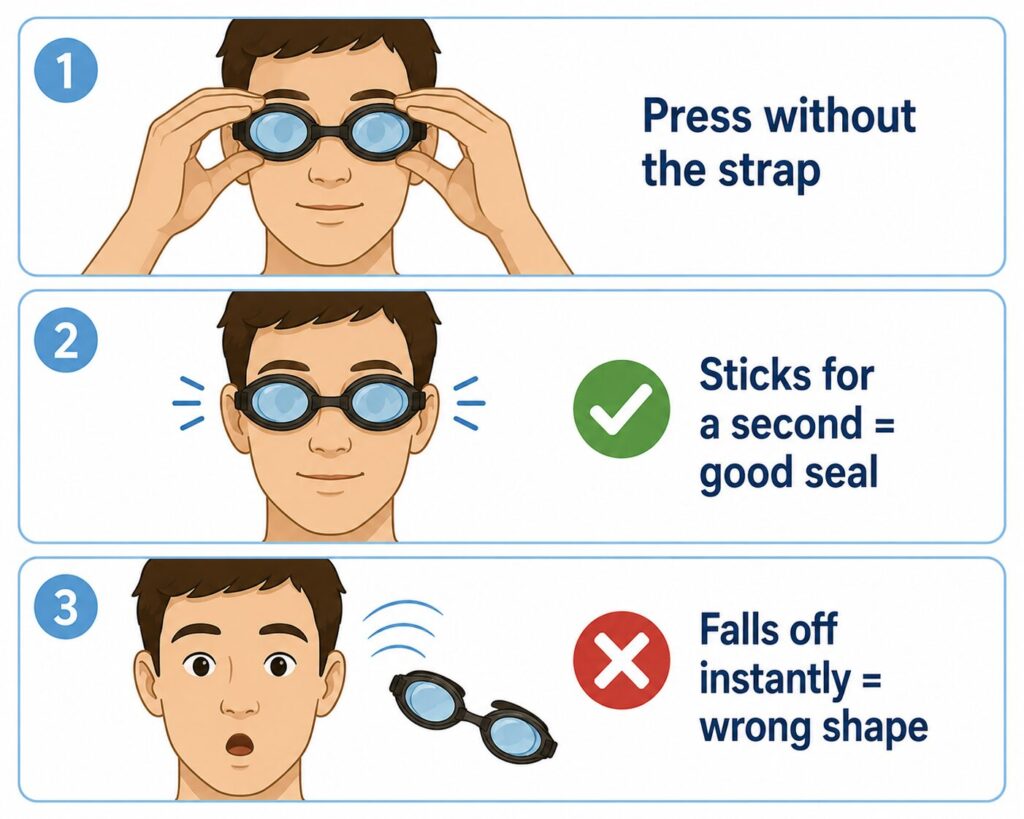
The best swimming goggles for beginners share three traits: a soft seal that’s comfortable without strap pressure, clear lenses for indoor pools (skip mirrored and dark tints), and a strap that stays put on push-offs.
The 10-second fit test, straight from our pool deck:
- Press the goggles onto your eyes without the strap.
- If they lightly stick for a second on their own, the seal matches your face.
- If they fall off instantly or leave deep pressure rings, try another shape.
Brands matter less than fit. A €10 pair from Decathlon that suctions to your face beats a €40 pair that leaks. Buy where you can try them on: Decathlon stores carry a wide range, and dedicated swim shops let you test several shapes in five minutes.
Fog fix while we’re here: never rub the inside of the lens, that destroys the anti-fog coating. Rinse with pool water, and use an anti-fog spray once the coating wears off.
Which swimming equipment fixes which beginner problem
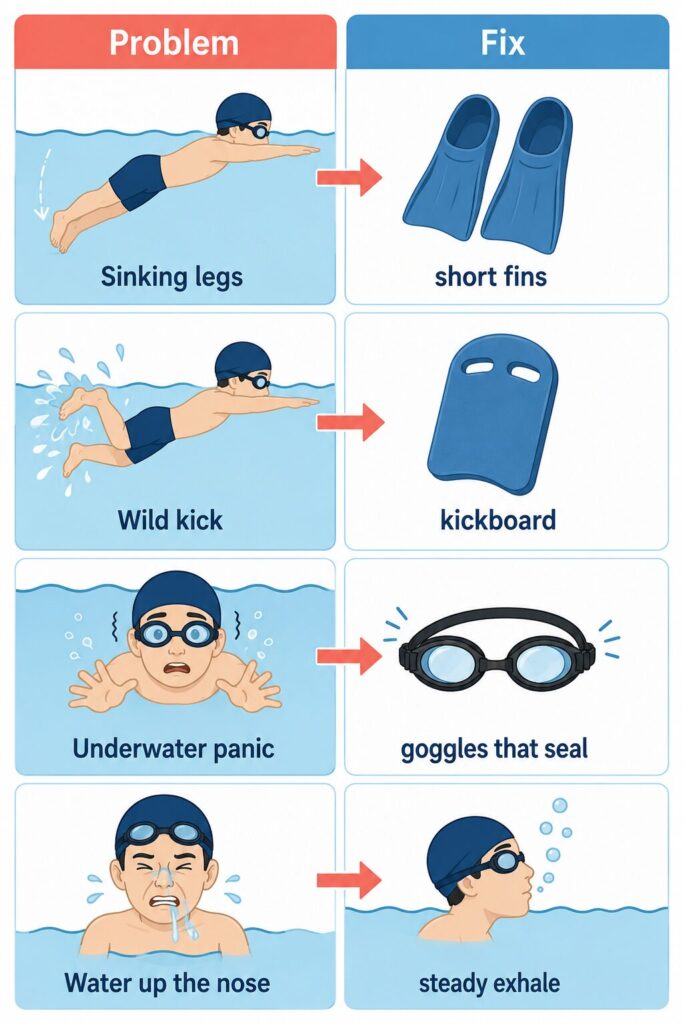
Nobody buys gear for fun; you buy it because something in the water isn’t working. This table maps the most common beginner complaints we hear at our lessons to the swimming equipment for beginners that actually fixes them:
| Your problem | Reach for | Why it works |
|---|---|---|
| “My legs sink” | Short fins, then pull buoy | Fins give propulsion while you fix head position; the buoy shows you what a flat body line feels like |
| “My kick goes everywhere” | Kickboard | Isolates the kick so you can feel a steady rhythm without the arm coordination puzzle |
| “I panic when my face is wet” | Goggles that seal properly | Seeing clearly underwater removes half the fear; leaks feed it |
| “Water shoots up my nose” | Steady nasal exhale (skill), nose clip only as a bridge | The clip buys calm while you learn to hum bubbles out; the exhale is the long-term fix |
| “I’m exhausted after one length” | Nothing to buy | That’s pacing and breathing, and equipment can’t purchase it. A coach or our sinking legs guide helps more |
That last row matters. If your first instinct after a hard session is to buy something, read it again. Buy comfort first. Then buy feedback: a coach, a video of your stroke, a lane buddy who tells the truth.
What to skip (so you don’t waste money)
A few things look pro but slow beginners down:
- Hand paddles: they amplify bad mechanics and can annoy shoulders fast
- Fancy tech suits: tight, pricey, and pointless for learning basics
- Snorkels: useful later for technique work, a distraction in month one
- A pile of gadgets: watches and sensors don’t fix breathing, balance, or timing
What we provide at our beginner swimming lessons in Amsterdam-Noord
Here’s the part that shrinks your shopping list. At Win and Swim we run beginner swimming lessons at Friendship SportCentre in Amsterdam-Noord, in a 25x15m pool kept around 29°C. Kickboards, pull buoys, and fins are waiting at the pool. Bring your suit, towel, and goggles and you’re set.
I tell every new student the same thing at the first lesson: spend your money on goggles that fit, and let us worry about the rest. One student spent months frustrated with a €5 pair that flooded on every push-off; a €12 replacement that passed the suction test fixed her head position in a single session, because she finally stopped lifting her eyes out of the water to see.
Warm water matters more than people think. At 29°C you don’t fight the cold, so your body stays loose and your breathing stays calm, which is exactly the state you learn in.
Pool first, open water later
If you’re learning in Amsterdam, start in a pool. Predictable water means better reps. When summer tempts you toward lakes and canals, stick to official outdoor swim spots and check water quality on Zwemwater.nl first. It’s the official national system for designated bathing waters, which are monitored during the season from 1 May to 1 October. Conditions still change fast, so check on the day.
Not tied to one pool yet? Our roundup of which Amsterdam pools are best for lap swimming points you to quiet lanes with room to practise.
And if you’re just getting started, our beginner’s guide to swimming covers the technique fundamentals that go with this equipment, and our sinking legs fix pairs perfectly with the fins and pull buoy above.
FAQs
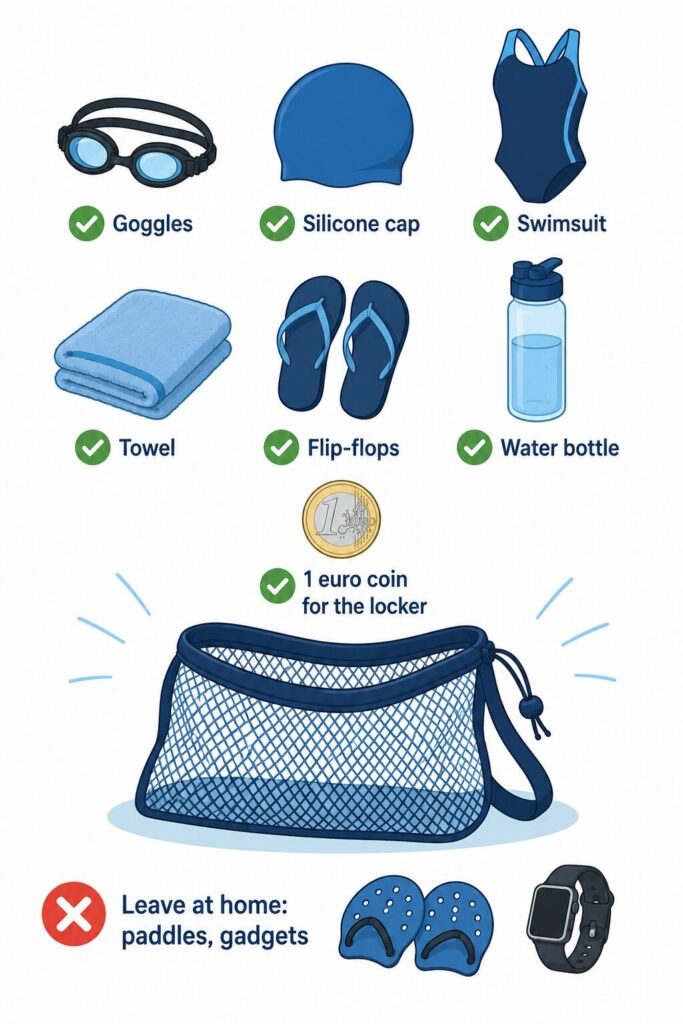
What swimming equipment does a beginner actually need? Six items cover everything: goggles, a silicone swim cap, a fitted swimsuit or jammers, short-blade fins, a kickboard, and a pull buoy. Many swim schools provide the last three, so most beginners only need to buy goggles, a cap, and swimwear, roughly €30 to €50 in the Netherlands.
How much does swimming equipment for beginners cost? Bought new in the Netherlands, the full six-item kit costs €60 to €110. The three personal items (goggles €8 to €25, silicone cap €5 to €12, fitted swimwear €15 to €40) come to €30 to €50. Decathlon covers the budget end; swim shops carry more shapes to try on.
Do I need a swim cap as a beginner? It’s not always mandatory, but it’s the cheapest distraction remover in swimming. Hair in your eyes, straps slipping, constant fixing: those little annoyances mess with breathing and confidence. A €6 silicone cap ends all of them.
Why do my goggles fog up so fast? Usually a mix of a poor seal and rubbing the inside lens, which ruins the anti-fog coating. Rinse with pool water, never wipe the inside, and use anti-fog spray once the coating wears off.
Kickboard or pull buoy: which helps beginners more? A kickboard helps when your kick and breathing are chaotic. A pull buoy helps when your legs sink and you can’t hold position long enough to learn. Pick based on what’s failing first; most swim schools provide both.
Are fins cheating for beginners? No. Short-blade fins are a learning tool. They give you enough speed to feel correct body position and calm breathing, the two things most beginners struggle with. Just don’t use them every session.
Pack the small bag, skip the big one, and put the money you saved toward time in the water.
Written by
Vlad Paturca
KNZB-certified swim coach, former Romanian national and international freestyle medalist, and founder of Win and Swim Amsterdam. Passionate about adult learners and evidence-based technique. With a bachelor degree in swimming and a first aid course, swimming is my element.
More about Win and Swim →