Stop Sinking Legs: The Beginner Balance Fix

The swimming myth I want dead: “Your legs sink because your kick is weak.”
Nope. Most beginners don’t need stronger legs. They need better balance.
Problem: hips drop, feet drag, freestyle turns into a fight.
Agitate: you kick harder, lift your head to grab air, and gas out, while your legs still sink.
Solution: fix the body line first. Once you’re balanced, your legs rise with almost zero drama.
Why Your Legs Sink in Freestyle
Sinking legs aren’t a personal failure. They’re physics.
Your lungs float. Your legs are often denser. Add a lifted head and the seesaw tips:
- Head up → hips down
- Head low → hips up
Breathing is the usual trigger. One tiny “peek forward” for air can break your line and dump your hips. If you want the longer explainer, Triathlete’s Q&A on sinking hips/feet is a good read.
The Beginner Balance Fix: Heavy Chest, Quiet Head
Here’s the cue that works when everything else fails:
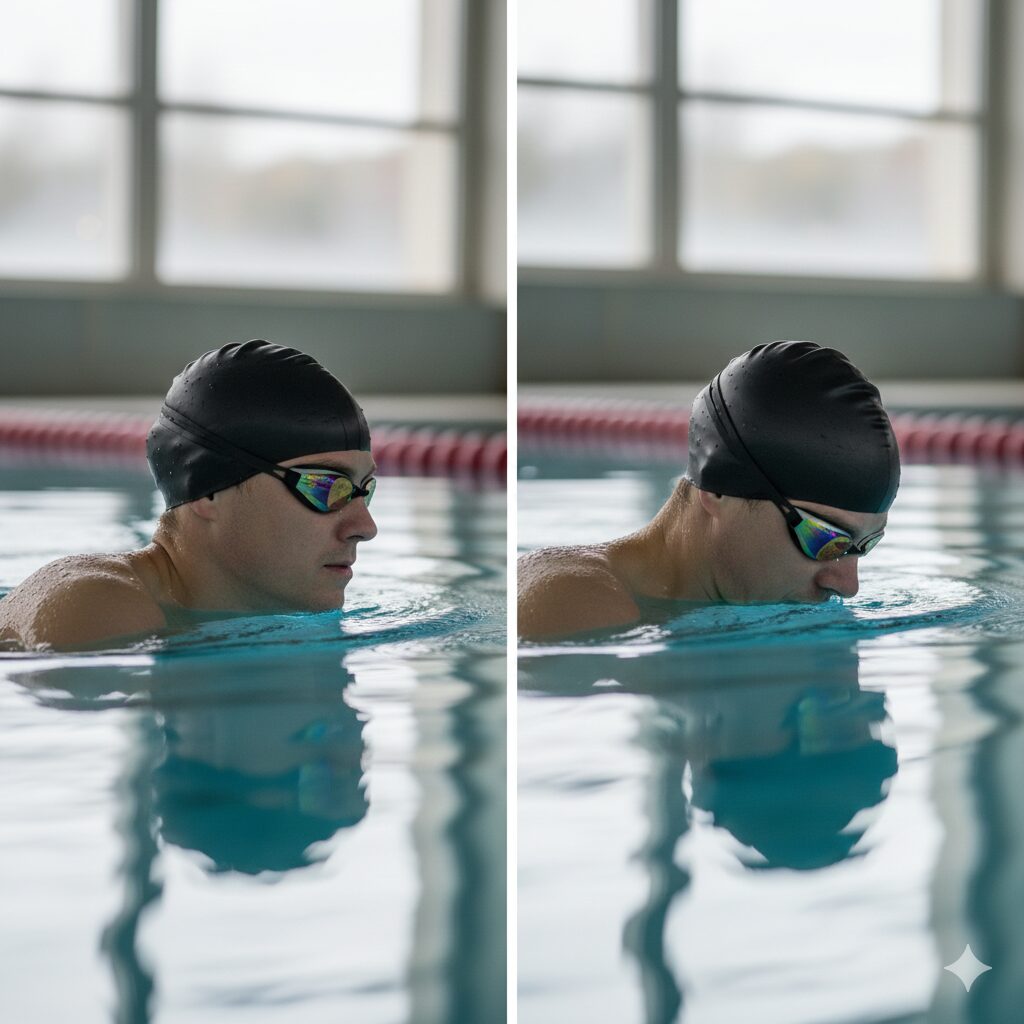
Press the chest slightly down and forward. Keep the head quiet.
Not forcing yourself under. Not clenching your abs. Just a calm “heavy chest” feeling that lets your hips float up behind you.
Quick push‑off checklist:
- Eyes down (pool floor, not the wall)
- Long neck
- Ribs soft (no lower‑back arch)
A 30‑second self‑test
Push off and do nothing for three seconds. No kick. No strokes.
If your legs drop immediately, your head is too high or your chest is too light. Fix those first. Then swim.
Stop Sinking Legs with 2 Simple Balance Drills
Drills should feel like discovery, not punishment. If you’re tense, slow down.
1) Superman Glide
Gentle push off. Arms straight. Face in. Eyes down. Hold 5–10 seconds.
Legs drop? Don’t kick harder.
Press the chest a touch and lengthen the neck.
2) Side Balance (“Skate”)
One arm extended, the other at your side. Rotate about 45 degrees.
Head still. Hips near the surface. Tiny flutter kick for stability.
Once side balance feels calm on both sides, freestyle stops feeling like chaos.
3 Leg‑Sink Triggers You Can Fix Today
These are the repeat offenders I see in adult beginners:
- Looking forward: head lifts, hips drop, drag goes up.
Fix: eyes down, trust the lane line. - Breath holding: you don’t exhale, then you panic‑turn for air.
Fix: gentle bubbles any time your face is in. - Pressing down with the arms: pushing water down pops the shoulders up and sends the legs down.
Fix: reach long; when you start the pull, send water back, not down.
Now let’s make breathing behave.
Breathing Without Dropping Your Hips
Use one rule: one goggle in, one goggle out when you breathe.
Then:
- exhale gently under water
- turn with your body rotation
- take a quick sip of air and return the face early
If both eyes pop out, your head went up, and your hips probably sank.
Kick That Helps (Not Hurts)
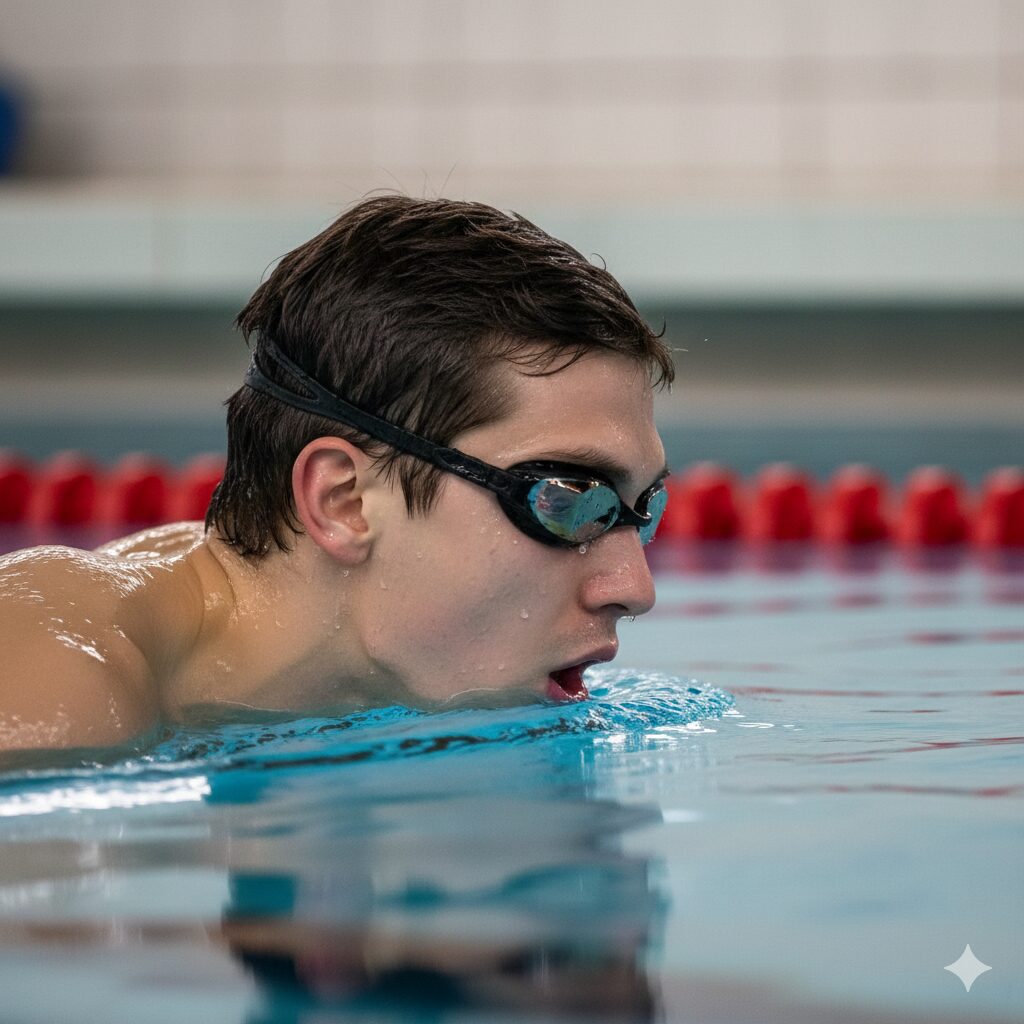
A beginner kick should be small and quiet:
- from the hips
- soft knees
- loose ankles
Big splashy kicks usually mean you’re trying to fix balance with effort. That’s backwards. Your kick’s first job is stability.
10‑Minute Pool Plan (2–3×/Week)
- 2× push off + 10s Superman Glide
- 4× 15m Side Balance (switch sides each length)
- 4× 25m easy freestyle: “heavy chest, quiet head,” breathe low
- 1× 25m normal freestyle, same cues, no extra effort
Short. Repeatable. Effective.
One more thing: the first session might feel weirder, not easier. That’s normal. You’re changing balance, and your body hates change. Give it three swims before you judge it.
Practising in Amsterdam: Do It Safely (and Actually Improve)
Amsterdam has water everywhere, but practise smart.
For pools, choose lanes where you can slow down and drill. For long, uninterrupted lengths, Amsterdam has big lap‑swim options like Sloterparkbad (50m pool). For true beginners, calmer teaching pools are often a better starting point.
For open water, stick to official swim spots and check water quality first. Outdoor water quality is monitored during the Dutch swim season (May 1 to October 1), and Zwemwater.nl is the easiest place to check updates.
Want feedback fast? This “stop sinking legs” work is a core part of Win and Swim’s Beginner Swimming Lessons in Amsterdam with small groups and real‑time corrections. Train in Amsterdam Noord
Read next
Supportive read: Freestyle Breathing Made Simple For Adults
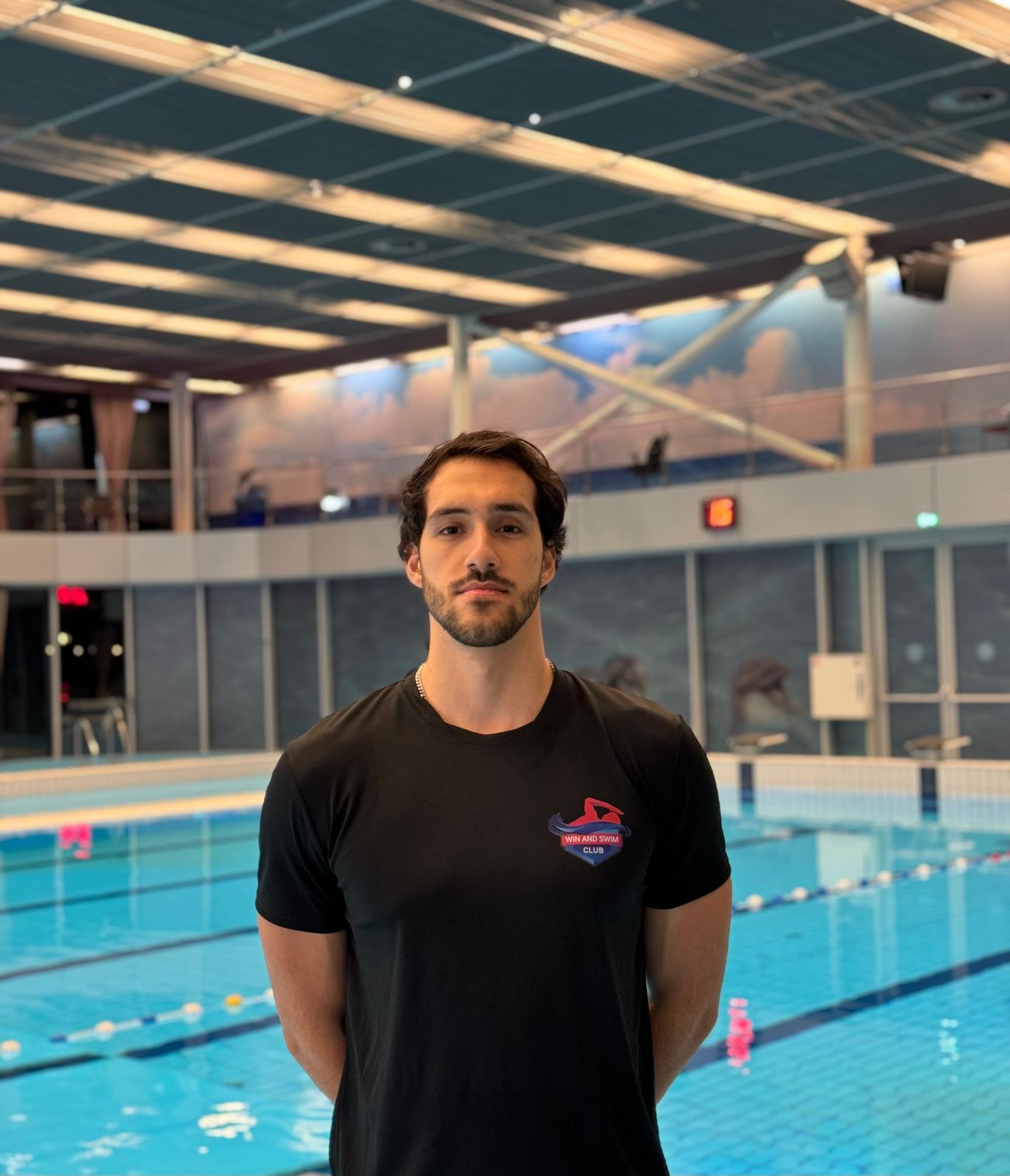
KNZB‑certified swim coach, former Romanian national and international freestyle medalist, and founder of Win and Swim Amsterdam. Passionate about adult‑learners and evidence‑based technique. With bachelor degree in swimming and first aid course, swimming is my element.