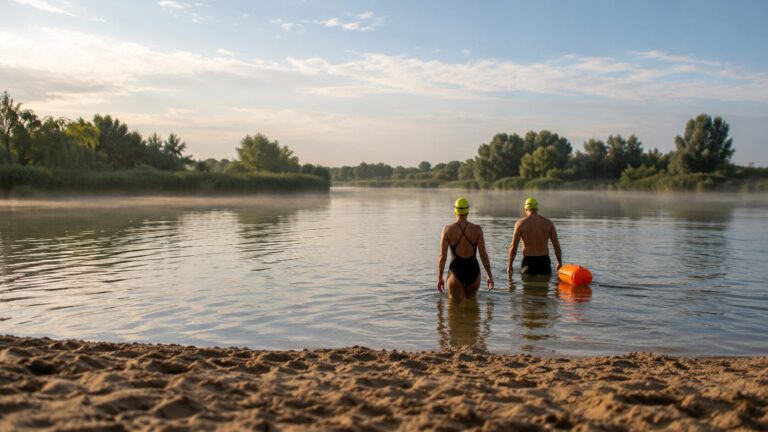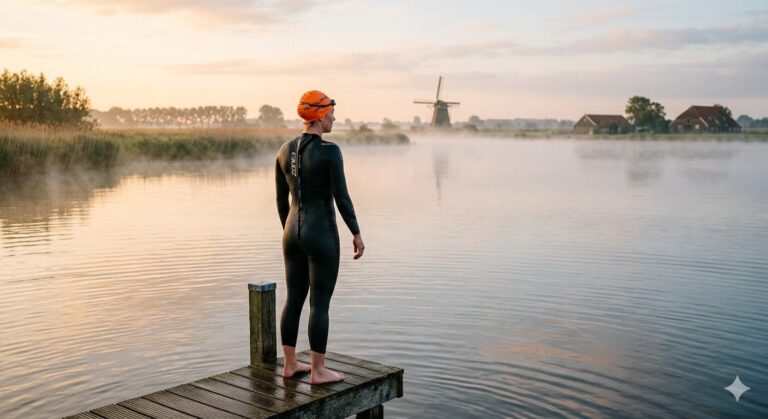
Cold Water Shock: How to Safely Get Into Open Water Without Panicking

Cold Water Shock: How to Safely Get Into Open Water Without Panicking
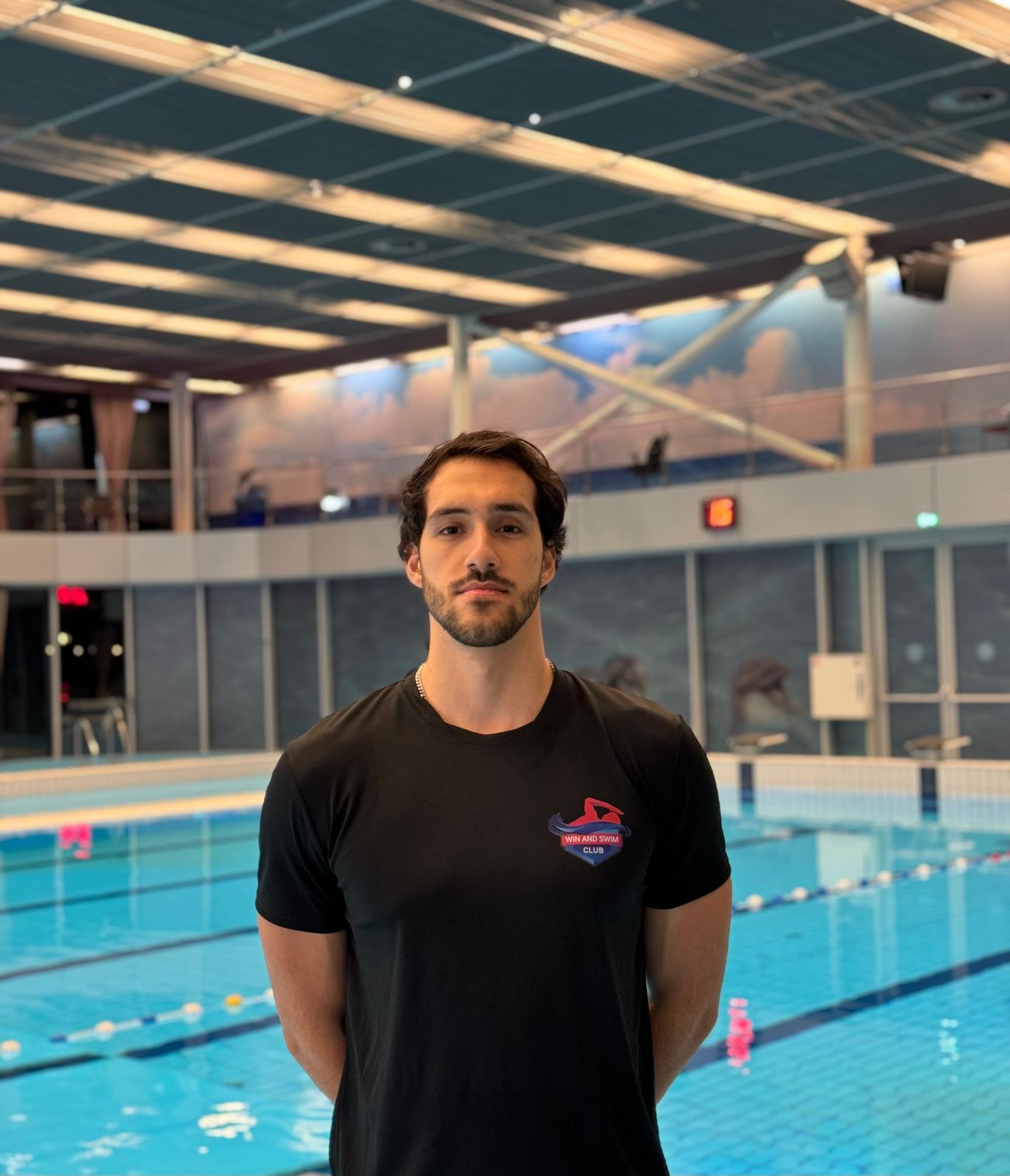 Vlad Paturca

On this page
“I’m a strong swimmer, the cold won’t bother me.” That’s the sentence I hear right before someone gasps, grabs the dock, and climbs straight back out. The thing that catches confident swimmers off guard in a Dutch lake isn’t distance or fitness. It’s cold water shock, and it can overwhelm an Olympic-level swimmer just as fast as a beginner.
So what actually happens, and how do you get in without panicking? Cold water shock is your body’s automatic reaction to sudden immersion in cold water. According to the RNLI, water below 15°C is cold enough to trigger it, and your breathing can spike out of control in seconds: an involuntary gasp, then hyperventilation, then a racing heart. The good news is that this reaction peaks fast and fades fast. If you know it’s coming and you control your first 90 seconds, you stay calm and your body adapts.
At Win and Swim in Amsterdam-Noord, we coach adults through their first open water swims every season, and cold water shock is the single thing we spend the most time preparing people for. Here’s exactly what it is and how to beat it.
What Is Cold Water Shock?
Cold water shock is a set of automatic, involuntary responses that hit the moment cold water touches a large area of your skin. You don’t choose them and you can’t fully switch them off. You can only prepare for them.
Three things happen almost at once:
- The gasp reflex. Your first reaction to cold immersion is a sharp, involuntary gasp. If your face is underwater when it fires, you inhale water. This is why people drown in the first few seconds, often before cold has done anything to their muscles.
- Hyperventilation. After the gasp, your breathing rate can climb dramatically. Fire and rescue research bodies note that breathing can increase up to tenfold, which makes it almost impossible to hold a breath or time it with your stroke.
- A spike in heart rate and blood pressure. Cold triggers a surge of stress hormones. For people with an undiagnosed heart condition, that surge alone carries risk.
The key thing to understand: none of this is about how fit or fast you are. Cold water shock is physiology. A triathlete and a first-timer feel the same reflex. The difference is that the prepared swimmer expects it and rides it out.
At What Temperature Does Cold Water Shock Happen?
The RNLI defines water below 15°C as cold enough to trigger cold water shock, and the effect is strongest somewhere between 10°C and 15°C. That range matters a lot here in the Netherlands.
Dutch lakes, plassen, and canals sit well inside the danger zone for most of the swimming season. In late spring, water around Amsterdam often hovers near 12°C to 14°C even when the air feels warm and inviting. That gap between warm air and cold water is exactly what fools people. The sun says “jump in.” The water has other plans.
A warm day does not mean warm water. Before any open water swim, I check the actual water temperature, not the forecast for the air.

The 1-10-1 Principle: What Cold Water Does in the First Hour
The RNLI teaches a simple model called the 1-10-1 principle, and it’s the clearest way to understand why panic is the real enemy. It breaks a cold immersion into three phases:
- 1 minute of cold water shock. The gasping and hyperventilation peak and then start to ease. This first minute is the most dangerous because that’s when uncontrolled breathing leads to inhaling water.
- 10 minutes of meaningful movement. After the shock passes, you have roughly ten minutes before cold starts to rob your arms and legs of strength and coordination. Use this window to get to safety or settle into a controlled swim.
- 1 hour before unconsciousness. Even in cold water, it usually takes around an hour before hypothermia causes you to lose consciousness. You have far more time than the panic in your chest is telling you.

The takeaway is reassuring once it sinks in. The terror of those first seconds lies to you. It says you’re drowning right now. The 1-10-1 principle says you have time, as long as you don’t let the first minute spiral.
Why Cold Water Shock Causes Panic (and How to Beat It)
Panic in open water isn’t weakness or a lack of nerve. It’s the gasp reflex and hyperventilation hijacking your breathing, and your brain reading that loss of control as “I am in danger.” One feeds the other. Fast breathing triggers fear, fear speeds up breathing, and the loop tightens.
You break the loop the same way every time: by taking control of your breath before anything else. When you slow your exhale, you tell your nervous system the emergency is over. Everything downstream of that, your heart rate, your stroke, your thinking, starts to settle.
This is also why a swimmer who’s already anxious about water feels cold water shock more intensely. The two amplify each other. If general water anxiety is your starting point, the cold makes it louder. We’ve written a full guide on how to conquer your fear of water step by step, and the calm-breathing work in there is the same foundation you’ll lean on in cold open water.
How to Get Into Cold Open Water Without Panicking: Step by Step
Never jump or dive into cold open water. That single mistake puts your face underwater at the exact moment the gasp reflex fires. Instead, get in slowly and deliberately. Here’s the sequence we teach at Win and Swim:
- Acclimatise before you’re in. Splash water on your face, the back of your neck, and your chest before you wade deeper. This gives your body a preview and softens the shock.
- Wade in to your waist and pause. Let your legs register the cold. Keep your shoulders up and your breathing slow.
- Wet your face and neck again. Cold receptors on your face drive a big part of the response, so introducing them early matters.
- Lower in to your shoulders, then stop and breathe. This is the moment the shock peaks. Don’t swim yet. Stand or hold a buoy and breathe.
- Control the exhale. Long, slow breaths out. Count them if it helps. Within 60 to 90 seconds the gasping settles and your breathing comes back under your command.
- Only then start swimming. Begin with easy, relaxed strokes and breathe every two or three strokes. Don’t sprint to “warm up.” A hard start spikes everything you just calmed down.
That whole entry takes two or three minutes. It feels slow when you’re cold and impatient. Do it anyway. The swimmers who get into trouble are almost always the ones who skipped straight to step six.

Float to Live: The One Skill That Saves Lives
If cold water shock ever does overwhelm you, or if you fall in unexpectedly, the RNLI’s advice is the same and it’s worth memorising: Float to Live.
Lean back in the water, spread your arms and legs, and let your body float. Keep your head back with your ears in the water. Your legs may sink, and that’s fine. Just float and let the gasping pass. You don’t fight the water and you don’t try to swim until your breathing is back under control, which usually takes 60 to 90 seconds.
Floating buys you the most precious thing in those first moments: time for the shock to fade so your brain can take over from your reflexes. It’s a survival skill every open water swimmer should practise in calm conditions before they ever need it for real.

How to Acclimatise to Cold Water: The Science of Getting Used to It
Here’s the encouraging part. Cold water shock is trainable. Your body habituates to cold immersion surprisingly quickly, and the science behind it is solid.
Research from the University of Portsmouth, led by Professor Mike Tipton, found that as few as five short cold-water immersions can cut the initial gasp and hyperventilation response by around half. The protocol in the studies was simple: brief head-out immersions of a few minutes in water around 15°C, repeated over several days. After that handful of sessions, the same swimmers showed dramatically calmer breathing and lower heart rates on entry.
In plain terms: the cold feels less violent every time you do it properly. What overwhelmed you in week one is manageable by week two. This is the scientific reason coaches tell you to start with short, frequent dips rather than one heroic plunge. You’re training a reflex, and reflexes respond to repetition.
A practical cold water acclimatisation routine looks like this: short exposures, done often, building gradually. Never extreme, never alone, never rushed.

Cold Water Shock Safety in the Netherlands
Cold water shock isn’t a rare freak event here. It’s a leading reason open water swimming turns dangerous. Dutch figures from the CBS recorded 146 drowning deaths in 2024, and roughly three-quarters of drownings in the Netherlands happen in open water rather than pools, according to data highlighted by Reddingsbrigade Nederland. Cold, sudden immersion, and overestimating one’s ability sit behind a large share of those incidents.

A few rules we treat as non-negotiable at Win and Swim:
- Never swim alone. A buddy or a supervised group is the single biggest safety factor in open water.
- Check the water, not the weather. Use zwemwater.nl for official water quality and designated swimming spots before you go. In and around Amsterdam-Noord, stick to monitored locations and stay out of shipping canals. Our guide to outdoor swimming spots in Amsterdam lists which ones those are.
- Wear a bright cap and a tow float. Visibility to boats matters, and a tow float gives you something to hold while your breathing settles.
- Build the skill with a coach first. In our advanced swimming lessons, we rehearse cold entries, breathing control, and Float to Live in a controlled setting before anyone takes it to a lake. If water anxiety is the bigger hurdle, our aquaphobia program starts even gentler.
One pattern I see every spring: the strongest pool swimmers are often the most rattled by their first cold open water session, precisely because they expected fitness to carry them. It doesn’t. Respect for the cold does.
A 4-Week Plan to Build Cold Water Confidence
Here’s a realistic progression for an adult swimmer who wants to handle cold open water calmly. Adjust the pace to how you feel, and never push through real distress.
- Week 1: Get comfortable with the entry. Practise the slow, step-by-step entry in supervised, shallow water two or three times. Stay in only a few minutes. The goal is controlled breathing, not distance.
- Week 2: Practise Float to Live and extend slightly. Add the float to each session and lengthen your time in the water once your breathing settles quickly on entry. You should already notice the shock feels milder.
- Week 3: Add easy swimming. Once your breathing is under control, swim short, relaxed sets parallel to shore. Keep a buddy and a tow float close.
- Week 4: Build duration and confidence. Extend your swim gradually, always entering slowly and always with company. By now the cold should feel like a familiar handshake rather than an ambush.
Keep the sessions frequent and short rather than rare and long. Habituation rewards consistency. At Win and Swim, we walk adults in Amsterdam-Noord through exactly this kind of progression, on land first, then in safe water, then open water. Cold confidence is step one. For the wider open water skill set like sighting and pacing, see our guide on how to prepare for open water swimming.
Written by
Vlad Paturca
KNZB-certified swim coach, former Romanian national and international freestyle medalist, and founder of Win and Swim Amsterdam. Passionate about adult learners and evidence-based technique. With a bachelor degree in swimming and a first aid course, swimming is my element.
More about Win and Swim →