Triathlon Swim Training in Amsterdam: A Coach’s Full Guide
Triathlon swim training in Amsterdam from a local coach: race distances, where to train, the NTB wetsuit rules and a 12-week plan for your first race.

Triathlon Swim Training in Amsterdam: A Coach’s Full Guide
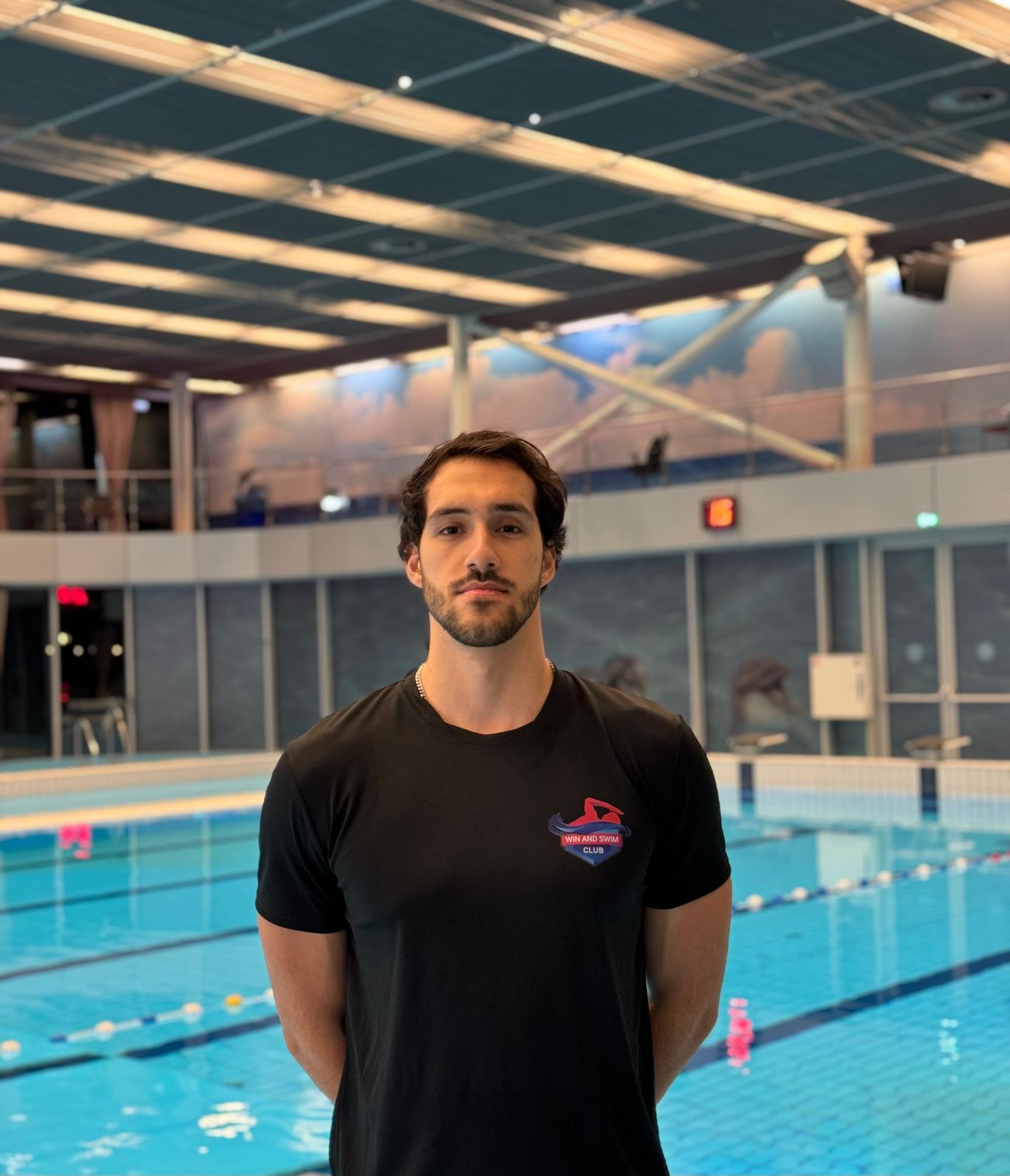 Vlad Paturca

On this page
Most triathletes in Amsterdam train the swim by doing more of it. They buy a lane pass, grind out 2 km at Sloterparkbad twice a week, and assume the fitness will carry over. Then race morning comes, they slide into the Amstel at the Berlagebrug with 400 other people, and 300 metres later their heart rate is at threshold and they can’t find the buoy.
Fitness was never the problem. Triathlon swim training in Amsterdam works when you build three things at once: an efficient freestyle, the open water skills a pool can’t teach you, and specific preparation for the water you’ll actually race in. The good news is that Amsterdam gives you everything you need for all three inside the ring road.
Here’s the number that reframes it. According to the Nederlandse Triathlon Bond, a wetsuit becomes mandatory for age-group athletes at 15.9°C and below, and is forbidden at 22°C and above for swims up to 1,500 m. Dutch open water crosses both of those lines within a single season. If your only preparation is pool laps in 28°C water, you have never once swum in the conditions your race will hand you.
I’m Vlad, a KNZB-certified coach at Win and Swim in Amsterdam-Noord, and I coach adults through this exact gap every season. This is the full picture.
Quick answer: train freestyle technique twice a week in a pool, add one open water session from May to September at the Bosbaan, Nieuwe Meer, Gaasperplas or Ouderkerkerplas, and spend the last six weeks before your race practising sighting, bilateral breathing and pack starts. For Tri Amsterdam on 6 June 2027, that means starting a 12-week block in mid-March.
What the Amsterdam Triathlon Swim Actually Asks of You
Before you plan a single session, know the target. These are the swim legs you can race in and around Amsterdam.
| Event | Swim distance | Water | Typical date | Notes |
|---|---|---|---|---|
| Sprint triathlon (NTB standard) | 750 m | Lake or river | Various, May to September | The usual first race. Around 15 to 22 minutes for most age-groupers. |
| TRI AMSTERDAM, standard distance | 1,500 m | The Amstel | Early June (6 June 2027) | Rolling start at the Berlagebrug, one athlete released per second. |
| TRI AMSTERDAM, middle distance | 1,900 m | The Amstel | Early June (6 June 2027) | Same course, same rolling start. |
| Amsterdam City Swim, Classic | 2,100 m | The canals | Early September (6 September 2026) | Not a triathlon, but the best race-simulation swim in the city. Shorter 700 m swims also run. |
| Bosbaan open water circuit | 250 m to 2,000 m | Rowing course | Summer | Flat, buoyed, measured. Ideal for a first open water race. |
| Sprint distance, NTB band | 500 m to 750 m | Lake or river | Various | The federation groups these together as the eighth/sprint tier. |
Two features of the Tri Amsterdam swim course matter more than the distance.
It’s a river, so there’s current. The course runs from the Berlagebrug out past the Utrechtsebrug and back. One direction will feel effortless and the other will feel like the water has thickened. Swimmers who pace by feel go out too hard on the assisted leg and blow up on the way home. Pace by stroke rate and effort instead.
It’s a rolling start. One athlete enters the water every second, which removes the mass-start scramble but replaces it with a different problem: you spend the whole swim overtaking and being overtaken by people at your own speed, in a narrow lane of water. You need to be able to sight, breathe and hold your line with a body next to you. That is a trainable skill, and almost nobody trains it.

Where to Do Your Triathlon Swim Training in Amsterdam
Amsterdam has better swim infrastructure than most triathletes use. Here’s the honest comparison.
Pools
| Pool | Length | Best for | Watch out for |
|---|---|---|---|
| Sloterparkbad | 50 m (8 lanes, splits to 2 x 25 m) | Race-distance sets, pacing, threshold work | Busiest lane pool in the city; check the banenzwemmen slots before you go |
| De Mirandabad | 50 m outdoor, 25 m indoor | Summer long sets outdoors | Outdoor 50 m is seasonal |
| Friendship Sport Center, Amsterdam-Noord | 25 m, heated to 29°C | Technique work in small groups | Warm water suits drills, less so hard threshold sets |
| Bijlmer Sportcentrum | 25 m (6 lanes) | Quiet weekday technique sessions | Short course only |
The 50 m pool matters more than people think. Every 25 m turn gives you a free push-off, a glide and a breath, and a 1,500 m set in a short-course pool hands you 59 of them. Your race gives you zero. Doing at least one session a week long-course, or with no-wall stops, closes that gap.
Which pool you choose matters, then: you want proper lane space and a pace clock. Our roundup of the best pools in Amsterdam for lap swimming flags which have both, and which run 50 m.
Open water swim training in Amsterdam: the four venues that matter
Open water swim training in Amsterdam runs roughly May to September, when water temperatures sit in the 16°C to 22°C band.
- De Bosbaan, Amsterdamse Bos. The oldest artificial rowing course in the world and the best training water near the city: a 2,200 m basin, flat, buoyed and measured. Open water races here run 250 m to 2,000 m.
- Nieuwe Meer. Three official swim locations on the 2026 Noord-Holland list, on the west side. This is the correct west-side choice, and it’s the one most triathletes get wrong.
- Gaasperplas. Official swimming location in the southeast, reliable water quality, easy shore access.
- Ouderkerkerplas. Just south of the city on the Tri Amsterdam bike course, so you can chain a swim and a ride. Two official strands, Zandstrand and Groenstrand.
One correction worth making loudly, because half the triathletes I meet still swim there: Sloterplas is not official swimming water. Sloterstrand lost its designation in 2023 after repeated E. coli exceedances and has not regained it. It doesn’t appear anywhere on the province’s 2026 list. Check the current rating for any spot on zwemwater.nl before you get in, and never train in a shipping channel. We’ve written a full local breakdown in our guide to outdoor swimming in Amsterdam, including which spots are officially designated and which are not.

Coach’s tip: your first open water session of the season should be 20 minutes of nothing but getting used to the temperature and the lack of a black line. Don’t measure it. Don’t race it. You are buying calm, and calm is the thing that saves you 90 seconds on race day.
The Four Skills Pool Fitness Won’t Give You
This is where most self-coached triathletes lose their swim. Every one of these is trainable in a 25 m pool.
- Sighting. Every four to six strokes, lift your eyes just above the surface, spot your target, and get your face back down before your hips drop. Practise it in the pool against the far wall clock. If you only start sighting in open water, you’ll learn it by lifting your whole head, which sinks your legs and costs you power.
- Bilateral breathing. Breathe every three strokes, both sides. In the Amstel the sun, the chop and the swimmer beside you all get a vote in which side is available. If you can only breathe right, you’ll spend the race with a mouthful of someone’s wake. Our guide to freestyle breathing covers the mechanics.
- No-wall pacing. Swim to the wall, stop, tread water for three seconds, push off from a dead stop. Do a full 400 m like that and you’ll feel exactly what your race pace is once you remove the free momentum.
- Contact tolerance. Swim a set two abreast in one lane, deliberately close enough to touch. Being brushed on the hand or clipped on the ankle should be boring by race day. The first time it happens should not be at the Berlagebrug.
One pattern I see every single season at Win and Swim: an athlete who can hold 1:45 per 100 m in the pool for 1,500 m falls apart at 400 m in open water. Their engine is fine. Their stroke rate has jumped from 60 to 78 because they’re anxious, and at 78 they can’t finish the catch. More laps will not fix that. Practising the specific skill under mild stress will.
That fade over distance is almost always a breathing and pacing problem rather than a fitness one. Our guide on how to swim without fading over distance walks through the same fixes at race pace.
The Wetsuit and Swim Rules Most Amsterdam Triathletes Get Wrong
The NTB competition rules are a Dutch translation of the World Triathlon rulebook, and they govern every race you’ll enter here. The wetsuit thresholds are set by water temperature and swim distance, and they’re stricter than most people assume.
| Swim distance | Wetsuit forbidden | Wetsuit mandatory |
|---|---|---|
| Up to 1,500 m | 22°C and above | 15.9°C and below |
| 1,501 m and longer | 24.6°C and above | 15.9°C and below |
| Age group 60+ (separate wave) | 24.6°C and above | 15.9°C and below |
A Dutch June sits right on the 22°C line. Plan to be able to race both ways. If you have only ever swum in neoprene, a warm race morning will take away your buoyancy and your legs will drop, and you’ll discover it in the first 200 metres.
Four more rules from the same page that catch people out:
- Any stroke is legal. Breaststroke the whole 750 m if that’s what gets you round. Nobody will stop you.
- You may stand on the bottom, and you may rest on a stationary buoy or boat. This is the single most reassuring rule in the sport and hardly anyone knows it.
- No gloves, socks or shoes, unless a wetsuit is mandatory, in which case socks are allowed.
- Compression tubes are only legal when wetsuits are legal. No wetsuit allowed means no tubes.
One local wrinkle. Tri Amsterdam publishes a simplified version of these thresholds on its own site: below 15°C required, 15°C to 22°C optional, above 22°C prohibited. For the standard distance that’s close enough to the federation rule. For the 1,900 m middle distance it isn’t, because NTB allows wetsuits all the way up to 24.6°C at that length. If the call is borderline, the organiser’s briefing on the day is what counts. The organiser also rents wetsuits at registration, which is worth knowing if you’re racing once and don’t want to buy one.
Your 12-Week Triathlon Swim Training Plan
This is the triathlon swim training plan I give adults preparing for a first sprint or standard distance race. Three swims a week, one of them open water once the season allows. Adjust the volumes, keep the structure.
| Weeks | Focus | Session 1 (technique) | Session 2 (endurance) | Session 3 (specific) |
|---|---|---|---|---|
| 1 to 3 | Rebuild the stroke | Drills: catch-up, single-arm, 6-kick switch. 1,200 m | 8 x 100 m steady, 20 s rest | 400 m continuous, count strokes per length |
| 4 to 6 | Add aerobic load | Drills plus 6 x 50 m fast. 1,500 m | 4 x 300 m at race effort | First open water swim, 20 min, no watch |
| 7 to 9 | Race specificity | Sighting every 6 strokes throughout. 1,600 m | 2 x 800 m negative split | Open water 800 m to 1,200 m, sight every 6 strokes |
| 10 to 11 | Sharpen | Short, fast, full recovery. 1,200 m | 1,500 m broken as 500/400/300/200/100 | Open water full race distance, in your race kit |
| 12 | Taper | 800 m easy with 4 x 25 m fast | 1,000 m relaxed | 400 m in open water, practise the start only |
Two rules that matter more than the numbers:
Never skip the technique session to add distance. At adult beginner and intermediate speeds, efficiency returns more time than fitness does. Cutting 4 strokes per 25 m off your count is worth more than an extra kilometre a week.
Swim the last long open water session in full race kit. Trisuit, wetsuit if you’ll be wearing one, race goggles, the cap you’ll actually use. Kit surprises on race morning are entirely avoidable and entirely common.

Triathlon Swim Training in Amsterdam: Coached or Self-Coached?
You can absolutely do this alone. Plenty of people have. The question is what you’re actually buying when you pay for triathlon swimming lessons in Amsterdam, and the honest answer is: an outside eye on the two or three things costing you the most time.
Self-coaching works well when you already have a technically sound freestyle and just need structure and consistency. It works badly when something in your stroke is broken, because you cannot see your own catch, your own head position or your own scissor kick, and video only helps if you know what you’re looking at.
The city gives you three routes:
| Option | What it suits | Trade-off |
|---|---|---|
| Triathlon club (ATAC, Tri Amsterdam clubs) | Athletes who want a squad, fixed sessions and race company | Squad sessions coach the group, not your stroke |
| Group swim training (SwimGym and similar) | Fitness and pacing in a lane with others | Volume-led, limited individual correction |
| Small-group or private technique coaching | Fixing what actually limits you | Costs more per hour, needs you to do the volume yourself |
At Win and Swim our advanced swimming lessons run in groups of up to seven at the Friendship Sport Center in Amsterdam-Noord, and the triathletes who come to us usually arrive with the same brief: “I can finish the distance, I just can’t do it without wrecking myself for the bike.” That’s a technique and pacing problem, and four to six focused sessions typically move it further than a whole winter of solo laps.
If you’re still building continuous freestyle beyond 100 m, start with technique before you start with a race plan. And if the open water side is the part that worries you, our guide to preparing for open water swimming walks through the transition step by step.
Race Week in the Amstel
The last seven days are about removing surprises.
- Swim the course if you can. The Amstel is publicly accessible along the Weesperzijde. Even a short swim near the Berlagebrug tells you what the visibility and the current feel like.
- Watch the temperature call. Organisers announce the water temperature and the wetsuit decision shortly before the start. Have both plans ready.
- Practise the rolling start on land. Walk it through: goggles on under the cap, one deep breath, walk to the ramp, enter, three strokes head-up, then settle. Rehearsed sequences hold up under adrenaline.
- Start easy on purpose. Swim the first 100 m at what feels embarrassingly slow. Your heart rate is already elevated from the start line, and going out hard on top of that is what turns a comfortable 1,500 m into a survival swim.
- Sight the next buoy, not the finish. Break the course into segments. It shortens the swim mentally and keeps your line honest.
Frequently Asked Questions
How long does the swim leg of a triathlon in Amsterdam take?
At TRI AMSTERDAM the standard distance swim is 1,500 m in the Amstel and most age-group athletes complete it in 25 to 35 minutes. The middle distance swim is 1,900 m and typically takes 32 to 45 minutes. A 750 m sprint swim takes most adults 15 to 22 minutes. Current in the river can shift these times by a minute or two in either direction.
Do I need a wetsuit for a triathlon in the Netherlands?
It depends on the water temperature on race day. Under Nederlandse Triathlon Bond rules, a wetsuit is mandatory for age-group athletes at 15.9°C and below, and forbidden at 22°C and above for swims up to 1,500 m. Between those temperatures it is optional. Dutch races in June and September commonly fall on either side of the line, so prepare to swim both with and without one. Some events, including TRI AMSTERDAM, rent wetsuits at registration.
Can you train for a triathlon swim only in a pool?
You can build the fitness in a pool, but not the skills. Sighting, swimming without walls, handling cold water and swimming in contact with other athletes only transfer partially from pool training. A realistic minimum is four to six open water sessions before your first race, with the last one at full race distance in your race kit. Sighting and no-wall drills in the pool make those sessions far more productive.
Are triathlon swimming lessons in Amsterdam worth it for a first race?
For most adults, yes, if the sessions focus on technique rather than volume. Adult triathletes usually lose more time to an inefficient catch, a dropped head or a scissor kick than to a lack of fitness, and those are faults you cannot diagnose from inside your own stroke. Four to six coached sessions before a first race is a common and effective dose. Win and Swim runs advanced lessons for triathletes in Amsterdam-Noord in groups of up to seven.
Where can you swim open water in Amsterdam for triathlon training?
De Bosbaan in the Amsterdamse Bos, Nieuwe Meer, Gaasperplas and Ouderkerkerplas are the four practical training venues in and around Amsterdam. The Bosbaan is the most useful for measured work because it is a 2,200 m buoyed rowing course. Sloterplas is not an option: Sloterstrand lost its official swim-location designation in 2023 and has not regained it. The season runs roughly May to September. Check current water quality at zwemwater.nl before every session, and never swim in shipping channels or unmarked waterways.
The Amstel doesn’t care how many lengths you’ve done. It cares whether you can stay calm, hold your line and finish the swim with something left for the bike.
Written by
Vlad Paturca
KNZB-certified swim coach, former Romanian national and international freestyle medalist, and founder of Win and Swim Amsterdam. Passionate about adult learners and evidence-based technique. With a bachelor degree in swimming and a first aid course, swimming is my element.
More about Win and Swim →