How to Prepare for Open Water Swimming as an Adult

How to Prepare for Open Water Swimming as an Adult
 Vlad Paturca
On this page
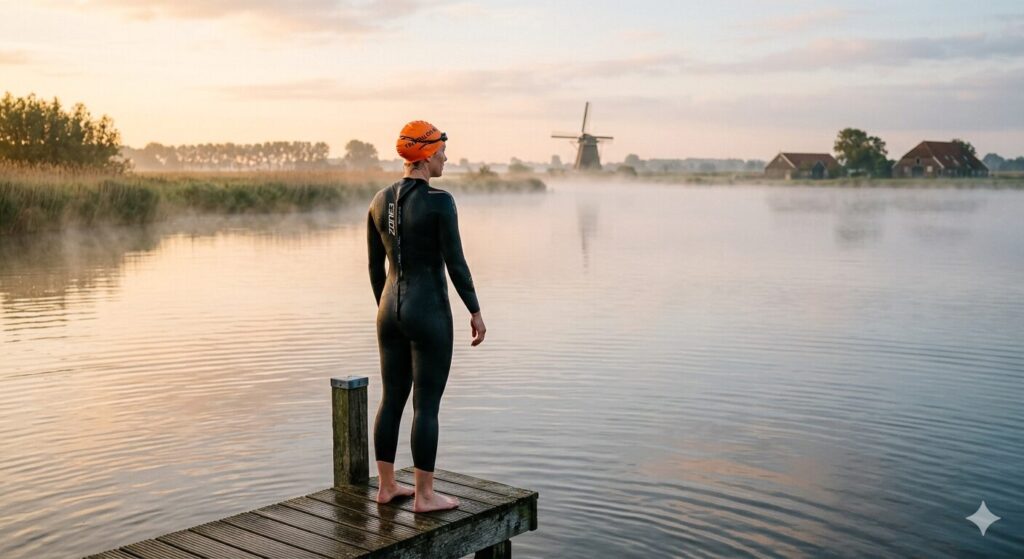
“I can swim laps just fine; how hard can a lake be?” That’s the line we hear most often from confident pool swimmers right before their first open water session humbles them. The truth is, open water swimming is a completely different skill set, and the gap between pool comfort and open water readiness catches almost everyone off guard.
So how do you actually prepare for open water swimming as an adult? You start in the pool, but you train differently. Instead of staring at a black line on the bottom, you practise sighting, bilateral breathing, and swimming without walls to push off. According to the Royal Life Saving Society UK, approximately 85% of accidental drowning deaths occur in open water environments rather than pools, which is exactly why preparation matters so much more than fitness alone. The good news: with the right drills and a structured plan, most adult swimmers can make the transition in four to six weeks.
At Win and Swim in Amsterdam-Noord, we coach adults through this exact shift, from pool-only swimmers to confident open water athletes. Here’s the honest breakdown of what it takes.
Why Open Water Feels So Different from the Pool
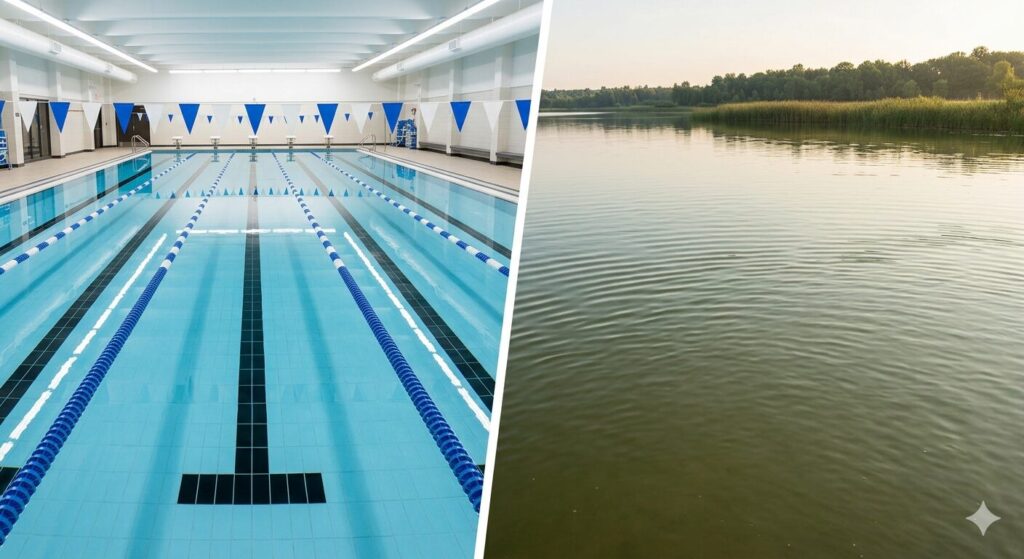
The pool is a controlled environment. Warm water, lane lines, a wall every 25 metres, and a clear view of the bottom. Open water strips all of that away.
Here’s what actually changes:
- No walls. You can’t stop and grab the edge. If you get tired, you tread water, or you float on your back. That mental shift alone throws off a lot of swimmers.
- No lane lines. Without a visual guide, most people veer off course within 50 metres. Sighting, lifting your head to spot a landmark, becomes essential.
- Temperature variability. Dutch lakes and canals range from about 14°C in late spring to 22°C in peak summer. Water below 15°C can trigger cold water shock, where your breathing rate spikes and your muscles tense involuntarily.
- Reduced visibility. Murky water, no black line, sometimes no visible bottom. For swimmers used to seeing where they’re going, this can spike anxiety fast.
- Currents and chop. Even mild wind creates surface movement that changes your breathing rhythm.
None of this means open water is dangerous if you’re prepared. It means your pool technique needs adapting, not replacing.
The first adaptation is learning to rest without a wall. If you can tread water calmly, a tired moment in open water becomes a pause instead of a crisis.
Open Water Swim Training for Adults – Where to Start
You don’t need to jump into a lake on day one. The best open water preparation starts in your regular pool sessions.
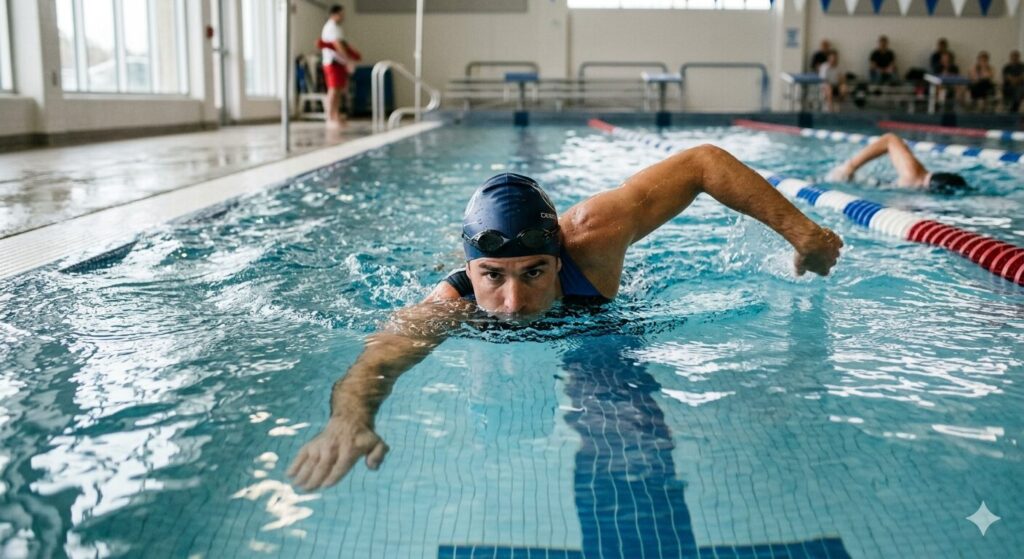
Sighting drills (head-up freestyle). Every four to six strokes, lift your eyes just above the waterline, like a crocodile, to spot a target at the end of the lane. This is sometimes called the “water polo drill” or “Tarzan drill.” It’s awkward at first because it drops your hips, but that’s the point: you learn to sight quickly and get your head back down before your legs sink.
Bilateral breathing. If you only breathe to one side, open water will punish you. Waves, sun glare, and other swimmers will force you to switch sides. Practise breathing every three strokes until it feels natural on both sides. If you need a deeper dive into breathing mechanics, we’ve written a full guide on freestyle breathing for adults.
Drafting practice. In open water, swimming close behind or beside another swimmer saves energy, roughly 20% less effort, according to research published in the Journal of Sports Sciences. In the pool, practise swimming within arm’s length of a training partner to get comfortable with proximity.
No-wall sets. Instead of pushing off the wall with a flip turn, stop at the wall, tread water for three seconds, then start swimming again. This simulates the reality of open water: no free momentum, just your own propulsion.
Swimming Lessons for Triathlon Training – Do You Need Them?
Can you train for a triathlon swim on your own? Technically, yes. Should you? Probably not, especially if you’re coming from a pool background.
The triathlon swim is the shortest leg of the race but causes the most anxiety. You’re swimming in a pack, there’s no lane, and your heart rate is already spiked from the adrenaline of the start. Self-taught swimmers tend to over-rely on speed work when what they actually need is technique under stress.
In our advanced swimming lessons at Win and Swim, we work specifically with triathlon swimmers on sighting, breathing control, and swimming straight without lane lines. One pattern I notice repeatedly: triathletes who can swim 1,500 metres in the pool fall apart after 400 metres in open water because they’ve never practised keeping a relaxed stroke when they can’t see the bottom. Structured coaching fixes that, not more laps.
If you’re planning your first sprint triathlon (typically a 750m swim), four to six coached sessions focused on open water skills can save you months of frustration.
If a race is the goal, our full guide to triathlon swim training in Amsterdam lays out the 12-week build from pool sets to race-pace open water.
Open Water Swimming Safety Tips Every Swimmer Should Know
Open water is rewarding, but it demands respect. These aren’t optional guidelines, they’re the difference between a good swim and a dangerous one.
Never swim alone. This is non-negotiable. Always swim with a buddy or in an organised group. The Reddingsbrigade (Dutch Life Saving Society) lists solo swimming as the single biggest risk factor for open water incidents.
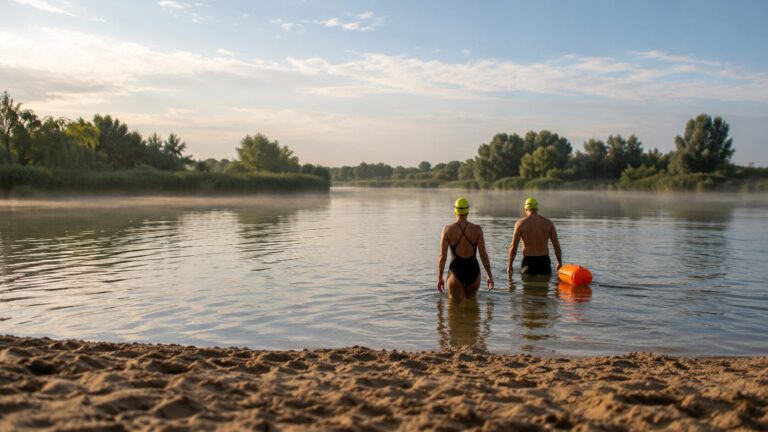
Acclimatise gradually. Don’t jump in. Wade in slowly, splash water on your face and chest, and let your body adjust to the temperature over two to three minutes. Cold water shock peaks in the first 60 to 90 seconds, if you can stay calm through that window, your body adapts.
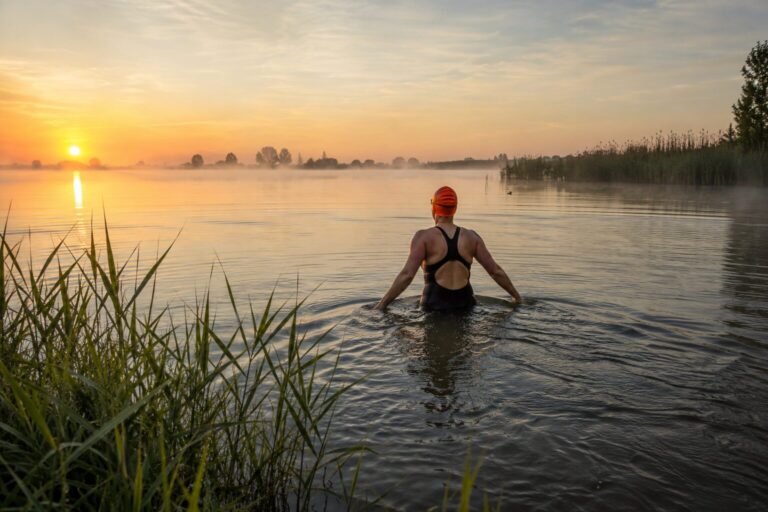
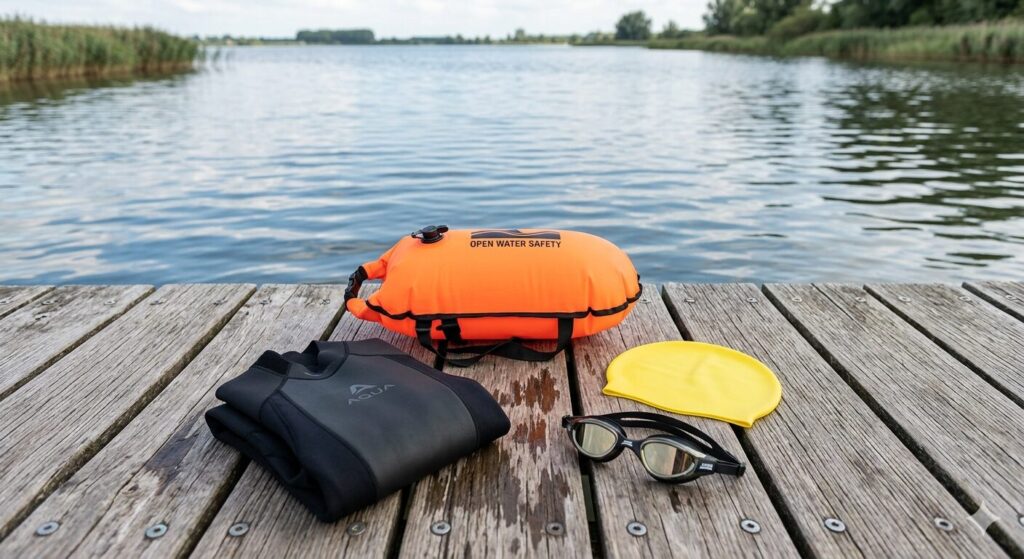
Wear a bright swim cap and tow float. A neon-coloured cap makes you visible to boats and other watercraft. A tow float (an inflatable buoy clipped to your waist) adds visibility and doubles as a rest aid if you need a break.
Know the location. In Amsterdam-Noord and the surrounding area, designated swimming spots (aangewezen zwemlocaties) are monitored for water quality. Check zwemwater.nl for current water quality ratings before heading out. Never swim in shipping canals or unmarked waterways. For a coach’s rundown of the official spots near the city, see our guide to outdoor swimming in Amsterdam.
Tell someone your plan. Before every open water session, tell someone where you’re going and when you expect to be back.
Making the Pool-to-Open-Water Transition – A Step-by-Step Plan
Here’s a realistic four-to-six-week plan for an adult swimmer who’s comfortable in the pool and wants to get open water ready.
Weeks 1-2: Pool Preparation. Add sighting drills, bilateral breathing, and no-wall sets to your regular swim sessions. Aim for two to three pool sessions per week. Focus on keeping your stroke relaxed when you can’t push off the wall.
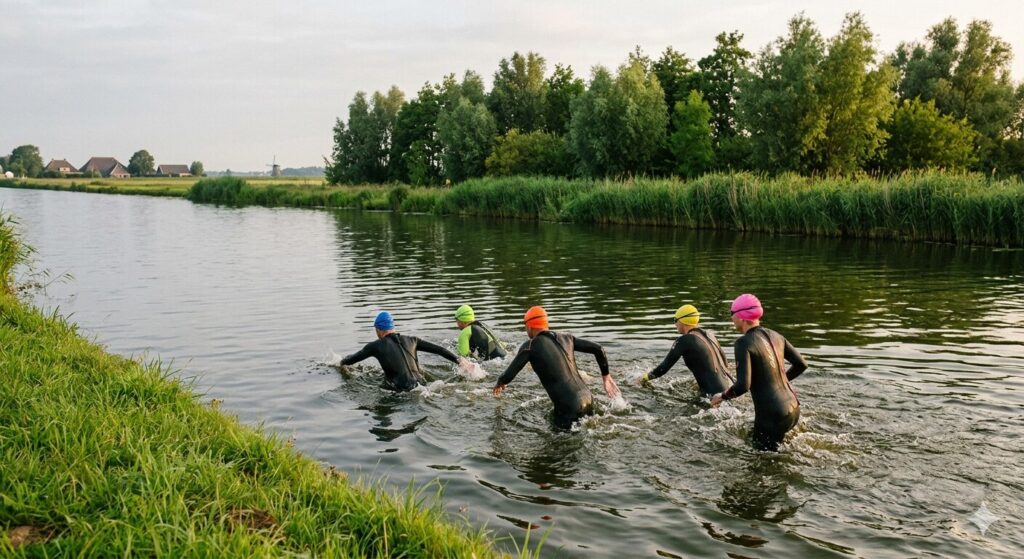
Weeks 3-4: Shallow Open Water. Find a supervised open water location, a lake with lifeguards or an organised group swim. Swim parallel to shore in waist-to-chest-deep water. Get used to the temperature, the feel of the water, and the lack of a black line. Don’t worry about distance; focus on staying calm and sighting every six strokes.
Weeks 5-6: Full Open Water Sessions. Swim a 400–800m route with a buddy or group. Practise your race-day routine: warm up on land, enter the water calmly, find your breathing rhythm, sight regularly, and exit smoothly. Build distance gradually, there’s no rush.
Throughout this plan, keep at least one pool session per week for technique work. The pool is where you refine; open water is where you apply. At Win and Swim, we coach adults through both sides of this equation.
Frequently Asked Questions
What’s the difference between pool swimming and open water swimming?
Pool swimming takes place in a controlled, heated environment with lane lines, a visible bottom, and walls to push off every 25 metres. Open water swimming happens in lakes, rivers, or the sea with variable temperatures, no visual guides, currents, and no walls. The key technique differences are sighting (lifting your head to navigate), bilateral breathing (to handle waves from either side), and pacing without the momentum of wall push-offs.
How do I build confidence in open water?
Start in the pool with drills that simulate open water conditions, sighting, bilateral breathing, and no-wall sets. Then transition to supervised shallow open water sessions where you can stand up if needed. Swim parallel to shore before venturing deeper. Most adult swimmers build solid confidence within four to six sessions if they follow a structured progression rather than just jumping in.
Can you do a triathlon if you’re not a strong swimmer?
Yes, but you need to prepare specifically for the open water swim leg. Many sprint triathlons have a 750-metre swim, which is achievable for most adults who can swim 100 metres continuously. The challenge isn’t distance, it’s swimming in a group without lane lines while managing adrenaline. Focused coaching on technique under stress makes a bigger difference than simply swimming more laps.
What equipment do I need for open water swimming?
At minimum: a well-fitting pair of goggles (tinted or mirrored for sunny conditions), a bright swim cap for visibility, and a tow float for safety. A wetsuit is recommended for water below 18°C, it adds buoyancy and warmth. Neoprene swim caps help in colder water. Avoid cotton clothing; it gets heavy and restricts movement.
How long should open water swim training sessions be?
For beginners transitioning from the pool, start with 20 to 30 minutes in the water and gradually extend to 45 to 60 minutes over several weeks. Quality matters more than duration, practise specific skills like sighting every six strokes, bilateral breathing, and maintaining a relaxed stroke. One focused 30-minute open water session is worth more than an hour of aimless swimming.
The water’s waiting – you just need a plan before you jump in.
Written by
Vlad Paturca
KNZB-certified swim coach, former Romanian national and international freestyle medalist, and founder of Win and Swim Amsterdam. Passionate about adult learners and evidence-based technique. With a bachelor degree in swimming and a first aid course, swimming is my element.
More about Win and Swim →